![District Court Obviousness: Post-IPR Shift Revealed [2026] — Legal AI Beat](/og-image.svg)
Is the district court the new battleground for patent obviousness? Look at the recent Federal Circuit decision in Otsuka Pharmaceutical Co. v. Lupin Ltd., No. 24-2297. It’s not just another affirmance; it’s a flashing neon sign pointing to a fundamental tectonic shift in how patent validity is challenged.
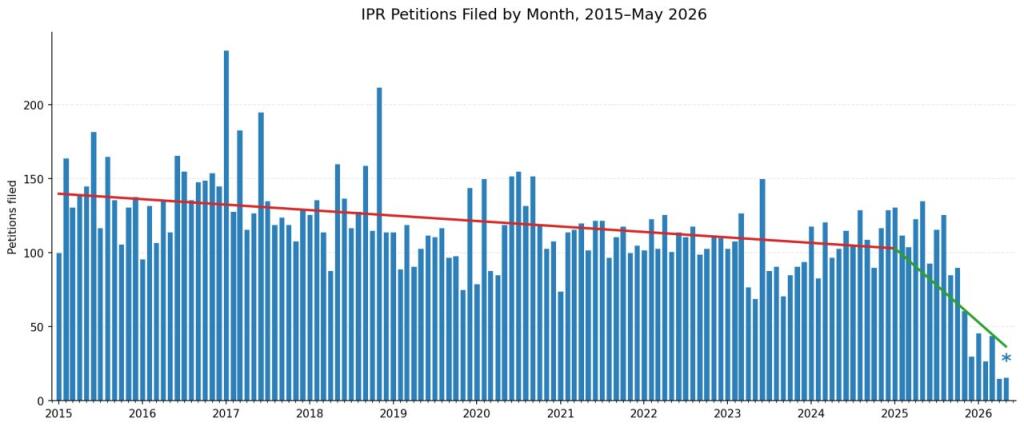
Director Squires has, let’s be blunt, choked off most easy access to inter partes review (IPR) at the PTAB. This isn’t a subtle policy adjustment; it’s a wholesale redirection. Suddenly, those armed with patent challenges – who would have naturally gravitated toward the PTAB’s decade-plus of codified obviousness adjudication — are finding their primary avenue slammed shut. Where do they go? Straight to the district courts, armed with the same arguments, and likely, a newfound urgency.
The PTAB built an entire operational universe around obviousness. We’re talking thousands of decisions dissecting motivation to combine, modify, reasonable expectation of success, lead compound selection, and the entire dance of secondary considerations. This isn’t just academic theory; it’s a fully fleshed-out body of decisional law. For district court judges presiding over bench trials, where they sit as factfinders, this existing PTAB corpus should, and apparently now must, be treated as persuasive authority. Citing it directly is no longer just an option; it’s smart strategy.
Now, jury trials present a different beast. The PTAB’s role as a factfinder complicates things, as that mantle correctly falls to the jury. But even there, the underlying legal reasoning and analytical frameworks forged in those thousands of PTAB decisions remain incredibly valuable.
Before Director Squires’s tenure, defense counsel often tiptoed around Section 103 obviousness in district court. The presumption of validity, coupled with the exacting clear-and-convincing burden, made it a tough sell. Plus, let’s face it, patent law is complex, and obviousness findings felt like a long shot for many. But the landscape has irrevocably changed. Thousands of patents have been whittled down by the PTAB on obviousness grounds. These aren’t niche cases; they represent a vast trove of previously unexploited vulnerabilities that district courts are now poised to examine.
In the Otsuka case, the patents in question covered highly pure tolvaptan, a critical drug for Autosomal Dominant Polycystic Kidney Disease (ADPKD), and methods for its production. The core of the dispute? Reducing impurities by limiting the amount of sodium borohydride. Otsuka’s patents specified 0.25–1 molar equivalents. Lupin’s process, however, used at least 1.2 molar equivalents, leading Judge Andrews to find no infringement after some claim construction wrangling. This part of the decision is interesting, but the real doctrinal juice lies in the obviousness analysis.
Judge Andrews found clear motivation. A skilled artisan would look to Kondo’s 1999 paper (which itself used 1.5 molar equivalents for small-scale synthesis) as a starting point. Then, they’d be motivated to modify that reduction step. Specifically, to reduce the sodium borohydride. Crucially, there was a reasonable expectation of success, and secondary considerations didn’t tip the scales. Each of these steps mirrors arguments we’ve seen debated ad nauseam at the PTAB.
This shift isn’t theoretical. Prior to the current administration, the PTAB handled most patentability challenges based on prior art patents and publications. District courts were left with issues like on-sale bars, public use, inventorship, written description, and enablement—things the Board can’t touch under 35 U.S.C. § 311(b). Hatch-Waxman ANDA cases often played out on both tracks, with parallel IPRs frequently resolving the validity questions before they even got deep into district court. That neat division of labor? Gone.
With IPR institution numbers collapsing, patent challengers are now backfilling district court dockets with affirmative defenses. This signals a coming surge in district court obviousness jurisprudence. And because of that massive PTAB corpus, the law isn’t starting from scratch; it’s building on a decade of incredibly detailed analysis.
My strong recommendation? Bench judges handling patent cases need to dive deep into the PTAB’s decisions. Treat them as persuasive authority. The methodology, the analytical framework – that’s what travels. It’s the factual conclusions that might not, due to differing burdens of proof.
And here’s a crucial caveat: the burdens of proof differ. The PTAB operates on a preponderance of the evidence standard. District courts demand clear and convincing evidence. A PTAB finding that prior art would have motivated an artisan is made on a lower evidentiary threshold. Judges can’t just rubber-stamp PTAB conclusions. The methodology is transferable; the conclusion is not.
Another snag: standards of review. The Federal Circuit reviews PTAB fact-findings for substantial evidence, but district court fact-findings for clear error. Both are deferential, yes, but not identical. A panel might accept a PTAB motivation finding on appeal without necessarily endorsing the underlying reasoning as a matter of law. This distinction matters.
So, while the approach seems tailor-made for bench trials, it’s a trickier proposition for jury trials. The fundamental structure of patent invalidity arguments under Graham v. John Deere Co., which informs jury instructions, is well-established, but integrating the nuanced PTAB-developed obviousness analyses requires careful navigation.
Here’s the truly provocative thought: If district courts are now inheriting the PTAB’s obviousness caseload, and if they increasingly rely on PTAB precedent, are we heading towards a de facto federalization of obviousness doctrine, albeit through the backdoor of persuasive authority? It’s a question the industry—and the courts themselves—will grapple with for years to come. The market dynamics have shifted, and the legal strategies must, and will, follow.
The PTAB’s Lingering Influence
It’s astonishing how much legal doctrine has been shaped by the PTAB’s existence. Even as its direct filings dwindle, the immense body of case law it produced on obviousness remains a critical resource. This is the legal equivalent of a major industry collapsing but leaving behind an indispensable blueprint for future development. For judges and litigators alike, understanding this precedent is no longer optional; it’s fundamental to success in district court patent cases.
Why Does This Matter for Patent Challengers?
For companies looking to invalidate patents, the current climate demands a strategic recalibration. The easier path through the PTAB is largely closed. This means doubling down on district court litigation, which is historically more expensive and time-consuming. However, the wealth of PTAB decisions on obviousness provides a powerful toolkit. Savvy challengers can use these analyses, adapting them to the higher burden of proof and the different procedural rules of district courts. It’s about weaponizing existing legal arguments in a new arena.
🧬 Related Insights
- Read more: ChatGPT Whispered Madness: Stalking Victim’s Lawsuit Exposes OpenAI’s Blind Spot
- Read more: Europe’s Small Businesses Bleed Cash on GDPR — But Still Can’t Pass the Basics
Frequently Asked Questions
What is inter partes review (IPR)?
IPR is a trial proceeding conducted at the Patent Trial and Appeal Board (PTAB) within the U.S. Patent and Trademark Office (USPTO) to review the patentability of one or more claims in a patent. It’s a way for third parties to challenge issued patents, often based on prior art.
Why are IPR filings decreasing?
Recent policy changes and administrative decisions by the USPTO, particularly under Director Kathi Vidal, have made it more difficult to get IPR petitions instituted, leading to a significant drop in filings.
How does the PTAB’s obviousness analysis differ from district court analysis?
The primary differences lie in the burden of proof and the standard of review. The PTAB uses a preponderance of the evidence standard, while district courts require clear and convincing evidence for invalidity. Federal Circuit review of PTAB fact-findings is for substantial evidence, whereas district court fact-findings are reviewed for clear error.