Has the Federal Communications Commission (FCC) officially lost its damn mind?
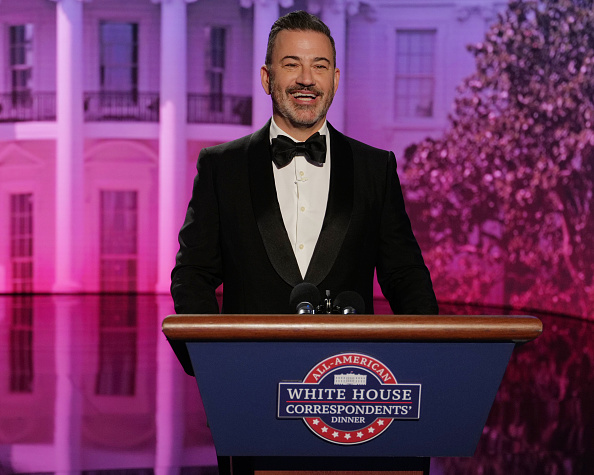
Look, I’ve seen my share of absurd regulatory overreach in my two decades covering Silicon Valley and its less-than-brilliant ideas. But FCC Commissioner Brendan Carr’s so-called “review” of ABC’s broadcast licenses, sparked by a Jimmy Kimmel joke about the First Lady, has to rank up there. It’s less a legal strategy and more a desperate, flailing attempt to weaponize a government agency for political gain. And frankly, it’s pathetic.
Carr’s office, in a move that reeks of Trump administration desperation, has sent a letter to ABC/Disney. The stated reason? They’re apparently accelerating a review of existing broadcast licenses because, you see, ABC is purportedly “violating DEI requirements.” Oh, please. The real kicker is Carr’s underlying argument: that ABC’s diversity policies are somehow “racist against white men” and violate the Communications Act. This is not just a stretch; it’s a full-blown contortion act designed to sound vaguely legal while being utterly nonsensical.
Who Actually Wins Here?
Let’s be clear: this isn’t about promoting fairness or enforcing actual broadcast standards. This is about pressure. Pure and simple. The Trump campaign wants to punish ABC, and by extension, any network that dares to host comedians who make fun of the president. But since directly demanding Kimmel’s firing would be a blatant First Amendment violation – and even Trump’s legal team might flinch at that particular tightrope walk – Carr’s playing a shell game. He’s trying to use the FCC’s licensing power as a cudgel, hoping to inflict enough annoyance and financial pain to achieve his objective indirectly.
But here’s the dirty little secret: yanking a broadcast license isn’t like swatting a fly. It’s a lengthy, complicated, and expensive legal battle. Carr knows this. Disney, with its armies of lawyers and deep pockets, would likely tie this up in court for years, and Carr would probably lose. So, what’s the endgame? It’s not a legal victory. It’s about creating a stink, making noise, and signaling to other media outlets that dissent comes with a price. It’s a classic intimidation tactic, and the sad part is, some outlets are falling for it, dutifully reporting Carr’s claims as if they hold water.
This is the most egregious action this FCC has taken in violation of the First Amendment to date. As part of its ongoing campaign of censorship and control, the White House called publicly for the silencing of a vocal critic, and this FCC has now answered that call. This is an unprecedented and politically motivated attempt to interfere with how broadcasters operate, and this unlawful overreach will fail.
That’s FCC Commissioner Anna Gomez, the lone Democrat on the commission, calling it what it is: a politically motivated attack on the First Amendment. Even Ted Cruz, bless his conservative heart, is apparently calling it out for what it is: the government acting as the “speech police.” When you’ve got Ted Cruz telling you your censorship campaign is too much, you’ve probably crossed a line.
Does This Matter for Legal AI?
While this specific FCC action is a dumpster fire of political maneuvering, it’s worth remembering that government agencies do wield regulatory power. The way they frame their actions, the legal justifications they offer, and the tools they employ can, and sometimes do, impact businesses across various sectors. Think about the constant stream of regulatory proposals around AI, data privacy, and content moderation. This current FCC kerfuffle, while overtly political, is a noisy reminder that even seemingly absurd regulatory actions can create ripples. Companies in the legal tech space, dealing with compliance, data handling, and intellectual property, need to be aware of how regulatory bodies operate – even when they’re being… well, this.
For Legal AI Beat readers, the takeaway isn’t just that Brendan Carr is being a buffoon. It’s about the broader context of how power is wielded and how legal frameworks can be contorted for political ends. It’s a stark illustration of how genuine legal processes can be cynically exploited. And for those wondering who is actually making money here? It’s the lawyers, naturally, who will get paid to fight this nonsense, and the media outlets that thrive on manufactured controversy.
This isn’t about innovation; it’s about intimidation. And it’s a disservice to the public and to the very concept of regulation.
🧬 Related Insights
- Read more: EU Member States’ Crushing Load: 88 AI Act Tasks That Could Fracture Enforcement
- Read more: How AI Companies Became Weapons Manufacturers—And Why It’s a Legal Reckoning
Frequently Asked Questions
What is Brendan Carr reviewing? Brendan Carr’s FCC is reviewing ABC’s broadcast licenses following a Jimmy Kimmel joke about the First Lady, citing alleged DEI violations as a pretext.
Is this a legal move or political pressure? Most observers, including the FCC’s lone Democratic commissioner, view this as a politically motivated attempt to pressure ABC and silence criticism, rather than a legitimate regulatory action.
Will ABC lose its broadcast license? It is highly unlikely that ABC will lose its broadcast license over this matter, given the complex legal process involved and the weak legal basis of the FCC’s argument.