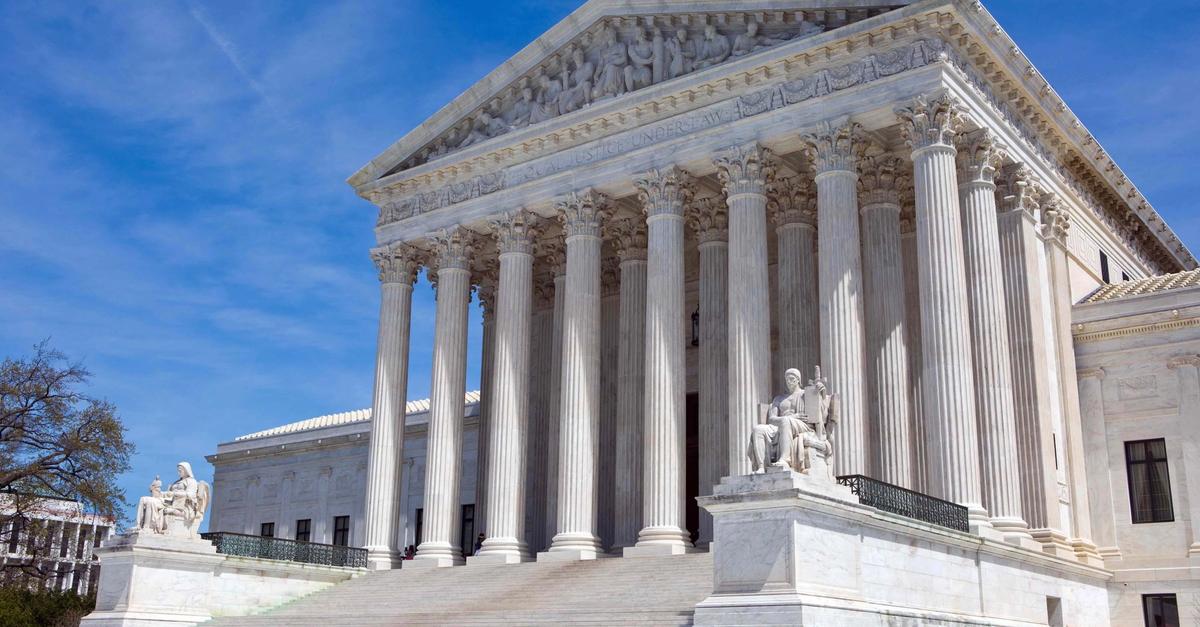
The Supreme Court just did its best impression of a shrug. And Alabama breathed a sigh of relief — or perhaps, a grimace of renewed legal wrangling.
Here’s the thing: the Supremes are letting Alabama use a congressional map that a lower court already slapped down. The reason? Allegedly, it violates the Voting Rights Act. You know, the one meant to stop racial discrimination in voting. The high court didn’t exactly give a ringing endorsement; they just tossed the lower court’s order and said, ‘Go look again.’ Delightful.
Justice Sotomayor, bless her feisty heart, wasn’t having it. She wrote a dissent, joined by Kagan and Jackson, calling the whole thing ‘inappropriate’ and predicting ‘confusion.’ Good luck explaining that one to voters who are apparently expected to cast ballots next week.
This whole mess started way back. Alabama drew a map after the 2020 census. Black voters and civil rights groups cried foul. They said the map deliberately split Black voters across three districts, rendering them minorities everywhere. The district court agreed. Then, the Supreme Court backed that ruling in Allen v. Milligan. So, Alabama tried again.
New map. Same story. Another federal court said, ‘Nope, this one likely violates Section 2 too.’ The Supreme Court, inexplicably, did nothing to pause that ruling. A special master, presumably a person who enjoys paperwork and despair, drew up yet another map. The district court ordered that one into play.
Then came the trial. The court found the 2023 map was, in fact, an ‘intentional effort to dilute Black Alabamians’ voting strength.’ Strong words. Alabama, naturally, ran to the Supreme Court, conveniently after the Louisiana v. Callais decision, which, surprise, also involved a disputed congressional map.
Alabama’s argument? Their case is just like Louisiana’s. They claimed they were just trying to achieve ‘neutral goals’ like protecting incumbents, and race wasn’t the deciding factor. Oh, and they passed a law to allow a special primary if the court let them use the 2023 map. Because urgency. Never mind that elections were scheduled.
But Sotomayor hammered home the point: the district court found intentional discrimination under the Fourteenth Amendment. That’s a whole different ballgame than the Callais legal technicalities. It’s like saying a murder conviction is unaffected by a speeding ticket. And she pointed out the obvious logistical nightmare of swapping maps days before voting.
So, what does this mean? It means the Supreme Court punted. Again. They’re not making a decision on the merits, just sending it back for more lower-court hand-wringing. It feels less like justice and more like legal limbo.
The most telling aspect here isn’t the legal maneuver itself, but the Supreme Court’s seeming eagerness to sidestep a definitive ruling on racial gerrymandering in favor of procedural delays. This isn’t about correcting a wrong; it’s about kicking the can down the road until the immediate election crisis passes, leaving the underlying issues festering. It’s a masterclass in judicial avoidance.
Alabama’s Congressional Map Drama: A Reminder of Past Battles
This isn’t the first time Alabama has tangled with the Voting Rights Act over redistricting. The state has a long, and frankly, embarrassing history of legal challenges concerning racial discrimination in voting. Each census cycle seems to bring a fresh iteration of this same fight, a proof to the enduring struggle for equitable representation.
Why is the Voting Rights Act Section 2 so Contentious?
Section 2 of the Voting Rights Act is the bedrock for challenging discriminatory voting practices. It prohibits any voting standard or practice that discriminates on the basis of race, color, or membership in a language minority group. The key here is ‘results.’ You don’t need to prove intent to discriminate, just that the practice results in discrimination. This is what makes it so powerful, and why states that might prefer less representation for certain groups fight it tooth and nail. The Allen v. Milligan decision, which affirmed that Section 2 claims could lead to the creation of majority-minority districts, set a precedent that Alabama has been trying to work around ever since.
What Happens Now for Alabama’s Elections?
The immediate effect is that Alabama can proceed with its elections using the 2023 congressional map. The lower court, however, is still tasked with reconsidering the case in light of the Supreme Court’s recent rulings. This could lead to further legal challenges, but for now, the state has its preferred map in play. Justice Sotomayor’s concerns about confusion are likely to materialize, especially if further rulings come down closer to other election dates.
**
🧬 Related Insights
- Read more: California’s Social Media Ban: Privacy vs. Protection?
- Read more: Financial Censorship: A New Frontier?
Frequently Asked Questions**
Will this Supreme Court decision affect the upcoming elections in Alabama? Yes, the Supreme Court’s decision allows Alabama to use its 2023 congressional map for the upcoming elections, even though it was previously blocked by a lower court for potential racial discrimination. The case is being sent back to the lower court for further review.
What was the Voting Rights Act Section 2 violation alleged? The plaintiffs alleged that Alabama’s 2023 congressional map violated Section 2 of the Voting Rights Act by diluting the voting strength of Black Alabamians, spreading them across multiple districts where they would be a minority.
Did Justice Sotomayor agree with the Supreme Court’s decision? No, Justice Sotomayor dissented, joined by Justices Kagan and Jackson. She argued that the Court’s order was inappropriate and would cause confusion, noting that the lower court had also found intentional discrimination under the Fourteenth Amendment, a finding independent of the issues addressed in the Court’s recent Callais decision.