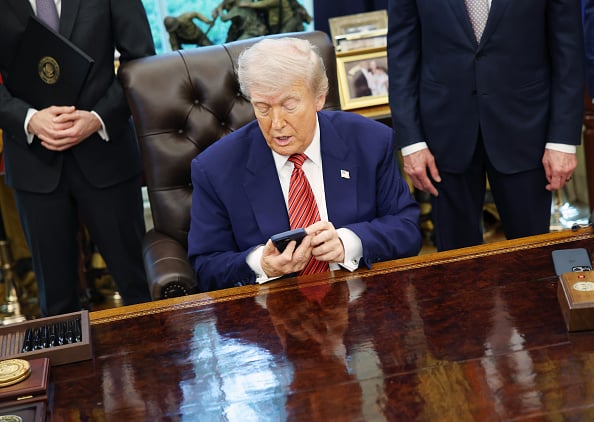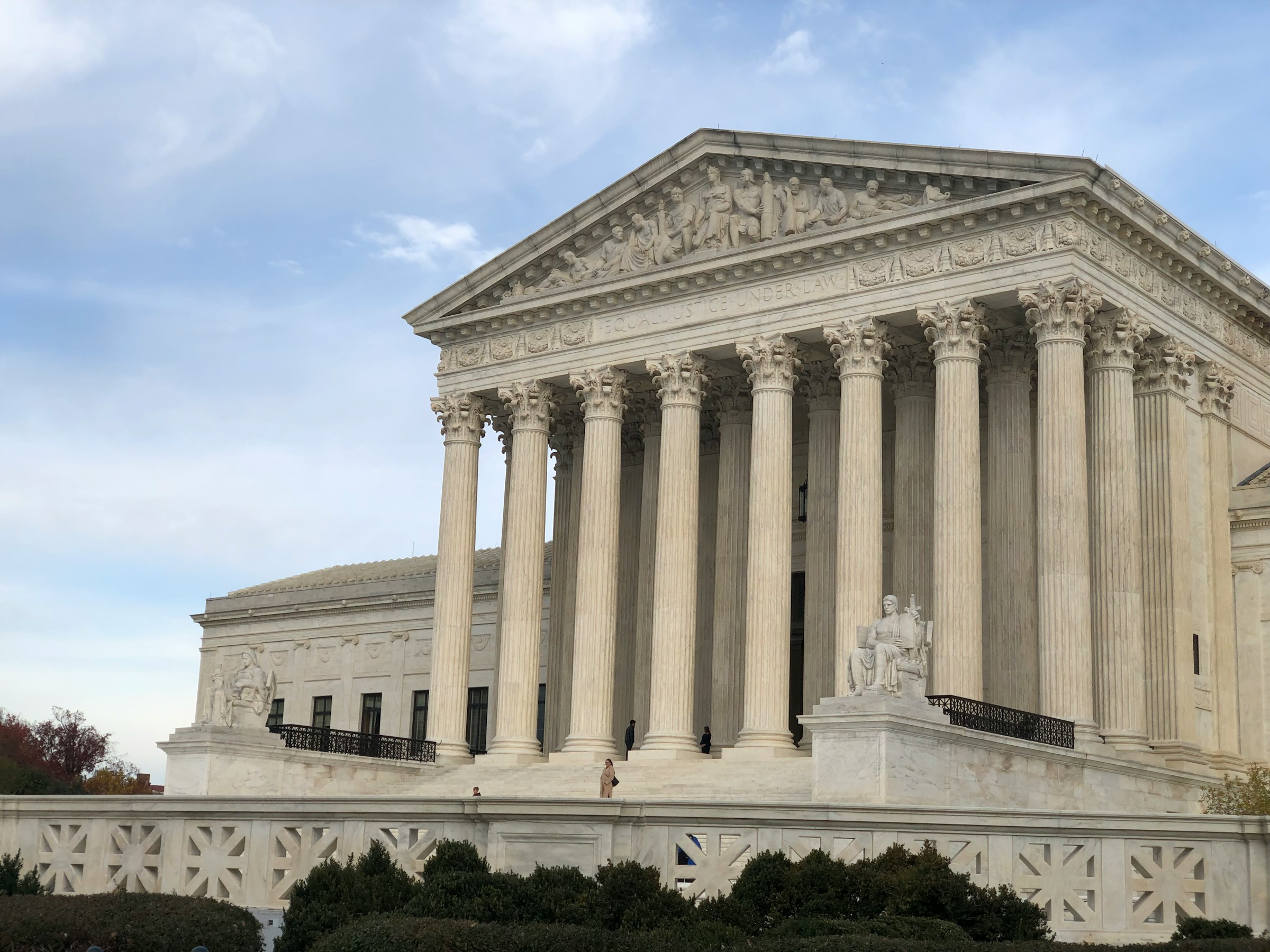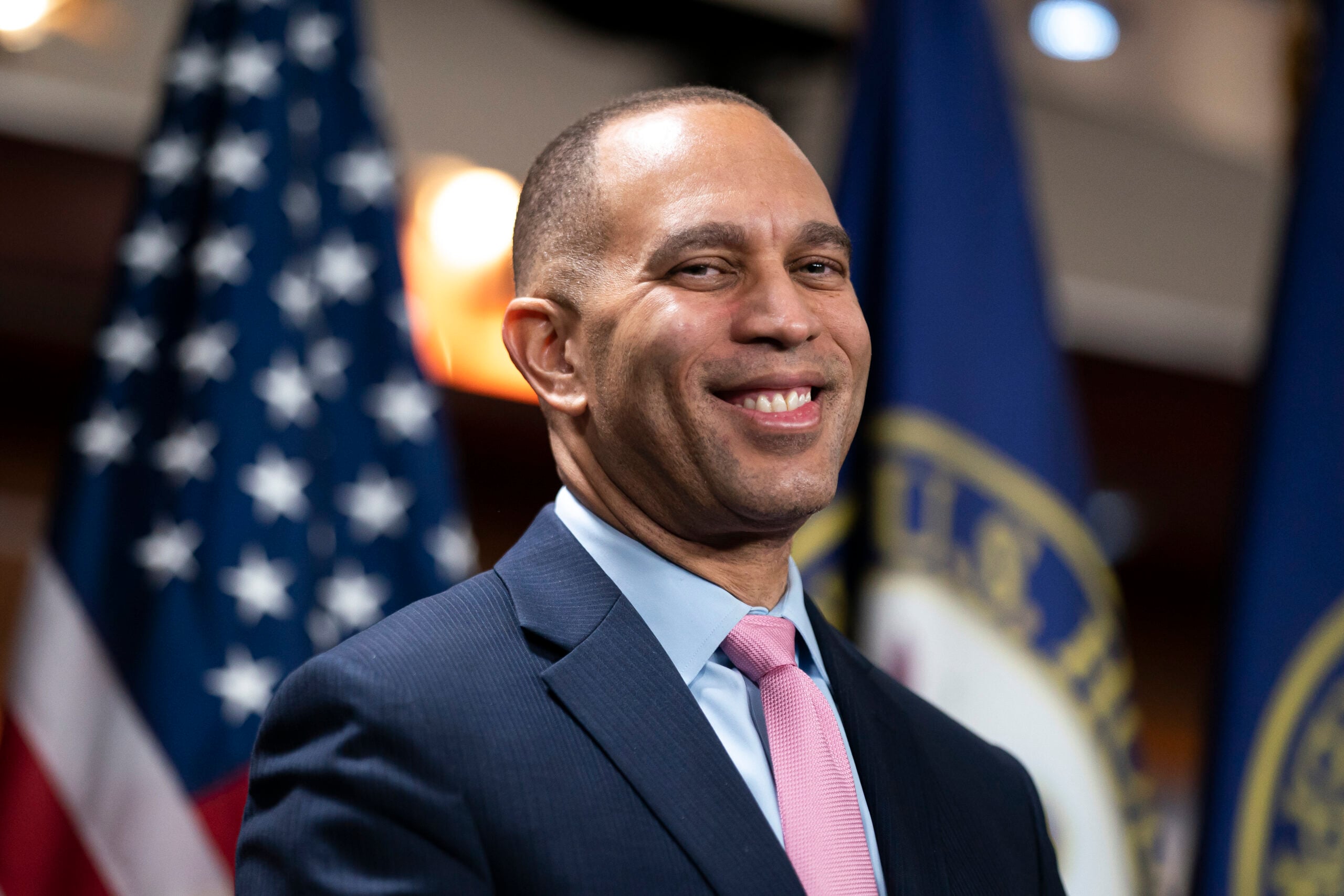
Here’s the thing: Donald Trump, fresh off declaring the Supreme Court a “weaponized and unjust Political Organization” that had “unnecessarily RANSACKED” the country, is now demanding an apology from House Minority Leader Hakeem Jeffries. Jeffries, it seems, dared to echo sentiment that resonates with a significant chunk of the American public by calling the Court illegitimate following its gutting of the Voting Rights Act in Louisiana v. Callais. Trump’s Truth Social pronouncements, demanding Jeffries withdraw his statement immediately because he’s a “Low IQ individual,” paint a stark picture.
One of the Greatest Institutions anywhere in the World, he claims. Funny how that institution’s greatness seems directly proportional to its last ruling’s benefit to Trump. The whiplash is almost dizzying.
Trump’s latest salvo isn’t just political theater; it’s a revealing peek behind the curtain of how certain powerful figures, including a former president, view institutions: as tools. They’re legitimate, venerable, even sacred, when they bend to their will. When they don’t? They’re compromised, politicized, and ripe for public condemnation. The Supreme Court, in Trump’s framework, isn’t an independent arbiter of justice; it’s a capricious entity whose value is measured in its vote count.
Let’s not forget the context Jeffries was responding to. The Court’s 6-3 decision in Louisiana v. Callais, penned by Justice Alito, effectively neutered Section 2 of the Voting Rights Act. This isn’t some abstract legal wrangling; it’s a dismantling of a cornerstone of civil rights protections, one that has historically safeguarded against racially motivated redistricting. As Justice Kagan eloquently stated in dissent, the majority had turned Section 2 into “all but a dead letter.” The downstream consequences are dire, with projections suggesting up to a dozen congressional seats in the Southeast could flip from Democratic to Republican control. Jeffries, alongside members of the Congressional Black Caucus, didn’t mince words: affirmative action, diversity, equity, inclusion, racial tolerance, and critically, the Voting Rights Act itself, were all declared “largely gone.”
So, no, Hakeem Jeffries does not need to withdraw his statement. Calling a Court that has just eviscerated the Voting Rights Act, via a partisan 6-3 vote, “illegitimate” is less provocation and more accurate description. It’s a recognition of a crisis the public has been signaling for years.
The numbers don’t lie. Years of tracking the Court’s declining public trust show a consistent downward trend. A mere 22% of Americans now express a great deal or quite a bit of confidence in the institution, a sharp decline from the 52% high registered before the Bush v. Gore decision. A 2024 Fox News poll found only 38% approval, a 20-point drop from its 2017 peak, with a staggering 83% of respondents acknowledging that partisanship significantly influences the Court’s decisions. The public, increasingly, sees the Court not as a neutral umpire, but as a political player. The profound irony, then, is that the very president who has arguably done more than most to cement this perception is now lecturing a political opponent for articulating it.
This transactional approach to institutional legitimacy isn’t unique to Trump, of course. Chief Justice John Roberts has long championed the idea that critics are simply “sore losers.” Yet, the evidence suggests the Court’s legitimacy crisis is largely self-inflicted. Its decisions, particularly in recent years, have become increasingly predictable along partisan lines, eroding public faith more effectively than any single politician’s rhetoric.
Trump’s demand for Jeffries’s apology highlights a deeper malaise: the erosion of shared respect for foundational institutions when their rulings displease those in power. His outrage isn’t about the Court’s legitimacy, but about the Court’s disagreement. And in demanding silence on dissent, he’s demonstrating precisely why the public questions the Court’s impartiality in the first place.
The Real Problem: A Court of Opinion, Not Law?
The Supreme Court’s legitimacy has been a slowly unfolding tragedy. For decades, it maintained a veneer of above-the-fray authority. But the shift, particularly since the early 2000s, has been palpable. The politicization isn’t just in the eyes of the public; it’s embedded in the very structure of appointments and the increasing ideological rigidity of its majority.
When a court’s decisions align perfectly with the platform of one political party, and consistently undermine the rights championed by the other, it’s disingenuous to feign surprise when its legitimacy is questioned. Trump’s demand for an apology is a strategic maneuver, a deflection from the substantive criticisms of the Court’s recent actions and its perceived partisan leanings. It’s an attempt to police the narrative, rather than address the reality of declining public trust. This isn’t just about one politician’s hypocrisy; it’s about an institution grappling with its own reflection in the public square.
Are Legal AI Tools the Next Frontier in Navigating Institutional Crises?
This crisis of legitimacy, and the increasingly polarized landscape it reflects, has a parallel in the nascent field of legal AI. As sophisticated AI tools begin to permeate legal practice—from contract analysis to predictive litigation modeling—they also raise questions of fairness, bias, and transparency. Will AI become another tool to either reinforce or challenge institutional authority? The development and deployment of these technologies will need to be guided by principles that promote, rather than undermine, trust and fairness in the legal system. The challenge for legal AI isn’t just about efficiency; it’s about ensuring that these powerful tools contribute to a more equitable and trustworthy legal landscape, especially when the bedrock institutions themselves are under scrutiny.
🧬 Related Insights
- Read more: [ALM Data] Am Law 100 Firm Partners Earn Just $380K Avg
- Read more: America’s Patent System: Eroding into ‘Infringe at Will’
Frequently Asked Questions
What is the Voting Rights Act Section 2? Section 2 of the Voting Rights Act of 1965 prohibits any voting qualification or prerequisite to voting, or standard, practice, or procedure imposed by any State or political subdivision, that discriminates on the basis of race, color, or membership in any of the language minority groups specified in. It’s a key tool for challenging discriminatory electoral practices.
Why did Trump call the Supreme Court illegitimate? Trump did not call the Supreme Court illegitimate in his recent Truth Social posts. He called House Minority Leader Hakeem Jeffries’s description of the Court as ‘illegitimate’ unacceptable and demanded an apology. Trump himself, however, had previously described the Court as a ‘weaponized and unjust Political Organization.’
What is the main criticism of the Supreme Court? The main criticisms leveled against the Supreme Court often involve accusations of politicization, partisan decision-making, and a decline in public trust. Critics point to decisions that appear to align with one political party’s agenda, leading to a perception that the Court is no longer an impartial arbiter of law.