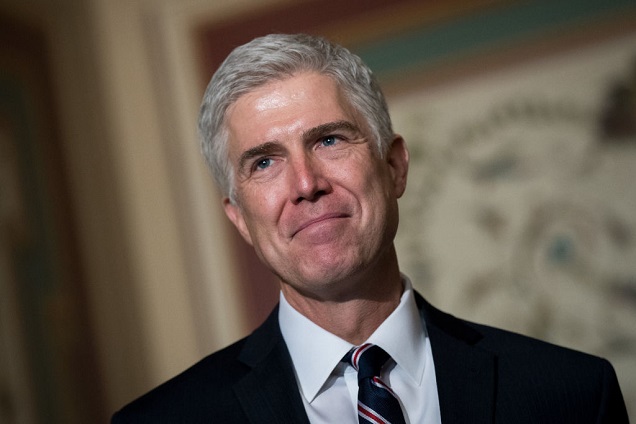
Imagine a conductor, deep in the symphony’s most delicate passage, suddenly hearing a jarring, out-of-place note. That’s essentially the sonic disruption Justice Neil Gorsuch is confronting. In comments made on Fox News Sunday, Gorsuch didn’t just shrug off the Supreme Court leaks that have frayed public nerves; he articulated a deep concern, framing it as an erosion of trust in a bedrock institution. But his message wasn’t one of pure condemnation for the act of leaking itself, but rather a fervent plea to trust the process, even as transparency feels like a distant, almost unattainable ideal.
His words cut through the noise, a stark reminder that the inner workings of the Supreme Court, much like the complex algorithms powering the latest AI, require a certain degree of controlled environment to function optimally. “We want some transparency, but we also have to leave room for candid conversations and deliberations with one another,” Gorsuch stated. It’s a sentiment that resonates, doesn’t it? We crave visibility, demanding to see every cog, every wire in the machine. Yet, for complex decision-making—whether it’s a judicial review or a multi-billion dollar AI deployment—true innovation and consensus often emerge from quiet, sometimes messy, internal dialogues.
Is Transparency Always the Answer?
Here’s the thing: Gorsuch isn’t arguing for a return to some shadowy, pre-digital era where decisions were made behind heavily guarded doors with no public oversight. Far from it. He’s quick to point out the existing avenues for scrutiny: public arguments, published opinions, and readily available reasoning. “Everything that I think about a case is there, on the printed page for anybody to read if they so choose,” he emphasized. This is the bedrock of public accountability in the judicial sphere. The transparency is undeniable, etched in ink and pixels for all who seek it.
But the leaks, these rogue data packets disrupting the otherwise orderly flow of information, create a different kind of problem. They breed suspicion. They invite speculation. They, dare I say, undermine the very public confidence that Gorsuch acknowledges is so vital. It’s like trying to debug a complex system while someone is constantly yanking out random wires – you can see the wires, but you can’t fix the underlying issue because the environment is too volatile. My own take? This is where the legal tech world can learn a vital lesson. We’re awash in AI tools promising unparalleled transparency, yet often the real magic happens in the training phase, the iterative development, the quiet recalibration before the model hits the public stage. Gorsuch’s struggle mirrors this: how do you champion openness without sacrificing the efficacy of the deliberative process?
The Delicate Dance of Deliberation
This isn’t just about the Supreme Court; it’s a fundamental question about how complex, high-stakes bodies—be they judicial, legislative, or even corporate—should operate in the full glare of a 24/7 news cycle. The pressure to be immediately and perfectly transparent can, paradoxically, stifle the very deep thinking required to make sound, well-considered judgments. Think of it like an AI model that’s constantly being retrained on incomplete or biased data. The outcome will be flawed, no matter how much you can see the training process.
“But do we need time to actually talk quietly with one another, to find those places where we can reach agreement? Yeah, we do.”
That single, powerful sentence from Gorsuch encapsulates the core of his argument. It’s a call for a space free from the immediate cacophony of public reaction, a sanctuary for reasoned debate. The leaks, by forcing these conversations into the public square prematurely, inject a level of performative pressure that can derail genuine consensus-building. It’s akin to trying to collaboratively code a critical patch for a global financial system on a public, unmoderated forum – chaos, not progress, is the likely outcome.
The Gorsuch Paradox: More Than Just Leaks
What’s truly fascinating here is the underlying tension. We demand accountability, and rightly so. But we also rely on institutions to function, to engage in the hard work of deliberation. Gorsuch’s plea is a recognition that these two demands can, at times, be in conflict. The leaks are a symptom of a broader societal anxiety about opaque power, an anxiety amplified by the digital age and the breathless speed of information dissemination. My unique insight here? This conversation isn’t just about legal procedure; it’s a microcosm of our evolving relationship with knowledge and authority in a hyper-connected world. We want to see the gears turn, but we also need the machine to work. Gorsuch’s stance, while perhaps frustrating to those craving immediate answers, is a defense of the very mechanism that, he believes, allows the Court to function effectively and, ultimately, to deliver its judgments.
It’s a bold position, asking for patience and faith in a process that has been publicly bruised. But in a world increasingly dominated by algorithms and opaque systems, the call to “trust the process,” even with its inherent messiness, might just be the most human thing to do.