The coffee machine in the Legal AI Beat bullpen was gurgling its usual Monday morning lament when the first alert popped. Another week, another stack of legalese and tech jargon masquerading as news. This time, it’s a mix of old legal wounds being reopened and new regulatory rumblings, particularly around that ever-present digital djinni: generative AI.
Let’s start with the Federal Circuit’s recent smackdown in Versata Software, LLC v. Ford Motor Co.. The judge in the district court tried to gut a jury’s $22.4 million trade secret misappropriation award down to zero, citing some convoluted reasoning about unjust enrichment damages under Michigan’s Uniform Trade Secrets Act (MUTSA). The CAFC, thankfully, saw through that nonsense and said, ‘Nope.’ They reinstated the jury’s award and even tossed out Ford’s attempt to wriggle out of liability, basically telling them to pay up and stop whining about the trade secrets being ‘combinations.’ Twenty-two million dollars. That’s the kind of number that makes you pay attention, unlike some of the airy-fairy pronouncements you hear from the AI startups these days.
So, what’s the takeaway? Don’t underestimate the power of a jury’s verdict, and don’t let a judge play fast and loose with established legal remedies just because it seems inconvenient. This is a win for IP holders, a reminder that trade secrets are, indeed, valuable secrets, and that chasing down damages isn’t just about proving theft, but also about the economic fallout.
And then there’s Europe, bless their bureaucratic hearts, sticking their nose into the generative AI copyright debate with a ‘call for evidence.’ The European Commission is essentially asking, ‘Hey, all you creators and tech folks, has generative AI broken copyright law?’ This isn’t just some academic exercise; it’s a precursor to potentially overhauling copyright frameworks to accommodate AI-generated content. You can bet your bottom dollar that the big AI labs are already drafting their carefully worded responses, trying to paint themselves as benevolent AI overlords rather than digital art thieves.
Nvidia, meanwhile, pops up with another earnings beat, their AI segments apparently doing just fine. They’re even tweaking how they report their financials to highlight this AI magic. Look, I’ve been watching hardware companies for two decades, and when they start dissecting revenue streams like this, it usually means two things: there’s a lot of money to be made in that specific niche, and they’re trying to keep investors focused on the shiny new object while the rest of the business chugs along. Who’s actually profiting? The chipmakers, undoubtedly. The folks who fed the models their data? Well, that’s a different story, and one we’re likely to see more legal wrangling over.
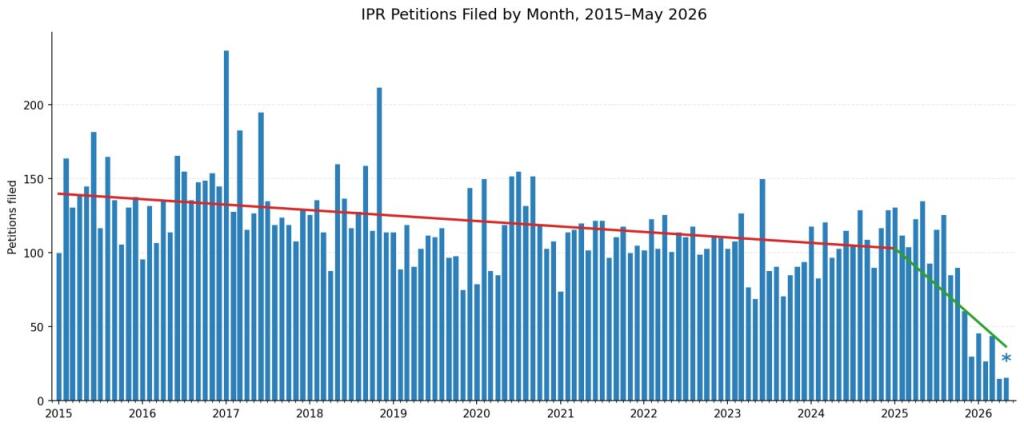
Oh, and USPTO Director John Squires is arguing with the Federal Circuit about whether they can even hear an appeal from InComm regarding an inter partes review (IPR). Apparently, InComm is trying to appeal the termination of an IPR, not the final decision itself. Squires is saying, ‘Nah, you can’t appeal that; it’s agency discretion.’ This is the kind of bureaucratic fencing that lawyers get paid the big bucks to navigate, and frankly, it’s a bit of a sideshow for the rest of us. But it does highlight the ongoing tug-of-war between patent challengers and the PTO over the review process.
And in a rare moment of good news for consumers (or at least, for those trying to manage their healthcare costs), the Supreme Court punted on pharma companies challenging the Inflation Reduction Act’s drug price negotiation program. Patient advocate groups are cheering, and a mobile billboard in D.C. is probably a lot more effective than some dry legal brief. This is about a fundamental shift in how drug prices are determined, and the pharma lobby is clearly not happy.
It’s a messy, complicated world out there, isn’t it? All these legal doctrines, all this new technology, and somewhere in the middle, people trying to make a buck and governments trying to keep up. The Versata ruling is a solid win for IP enforcement, the EU’s copyright inquiry is a necessary, albeit slow, step toward clarity on AI, and the pharma fight shows the ongoing tension between innovation and affordability.
Why Does This Matter for Innovators?
From the trenches of trade secret law to the global discussion on AI and copyright, these developments underscore the ever-present need for strong legal strategies. Companies aren’t just building products anymore; they’re navigating a minefield of evolving regulations and established precedents. The Versata decision signals that juries can and will deliver significant damages for IP theft, while the EU’s proactive stance on generative AI means businesses need to prepare for potential shifts in how intellectual property is defined and protected in the age of intelligent machines. It’s not enough to innovate; you have to insulate that innovation legally.
Who’s Actually Making Money Here?
Let’s be blunt. Nvidia is raking it in on the hardware side of AI. Versata just got a substantial payout, proving that legitimate trade secret claims still hold serious financial weight. The pharmaceutical companies challenging the IRA? They’re fighting to maintain their profit margins, plain and simple. The EU’s copyright investigation? That’s about shaping future markets and ensuring European creators aren’t drowned out by AI-generated content, which, if successful, could lead to new licensing opportunities or regulatory burdens. The question of who profits from AI-generated content is still wide open and ripe for legal battles, a prospect that certainly excites the legal tech and law firm industries.
🧬 Related Insights
- Read more: FTC’s 2026 Plan Ditches Metrics, Ignores Vulnerable [Critique]
- Read more: Morning Docket Mayhem: Rankings Revolt, Biglaw Backlash, and a Judge’s Epic Fall
Frequently Asked Questions
What did the Federal Circuit decide in the Versata v. Ford case?
The Federal Circuit reinstated a jury’s $22.4 million award for trade secret misappropriation, overturning a lower court’s decision to reduce it to zero and affirming the availability of unjust enrichment damages under Michigan law.
What is the EU’s call for evidence on generative AI and copyright? The European Commission is soliciting input from stakeholders to understand the impact of generative AI on copyright law and to inform potential reforms to the EU’s copyright framework.
Will generative AI replace legal professionals? While generative AI can automate certain tasks, it’s unlikely to fully replace legal professionals. Complex analysis, strategic advice, and human judgment remain critical in the legal field, though AI tools will likely transform workflows and necessitate new skill sets.