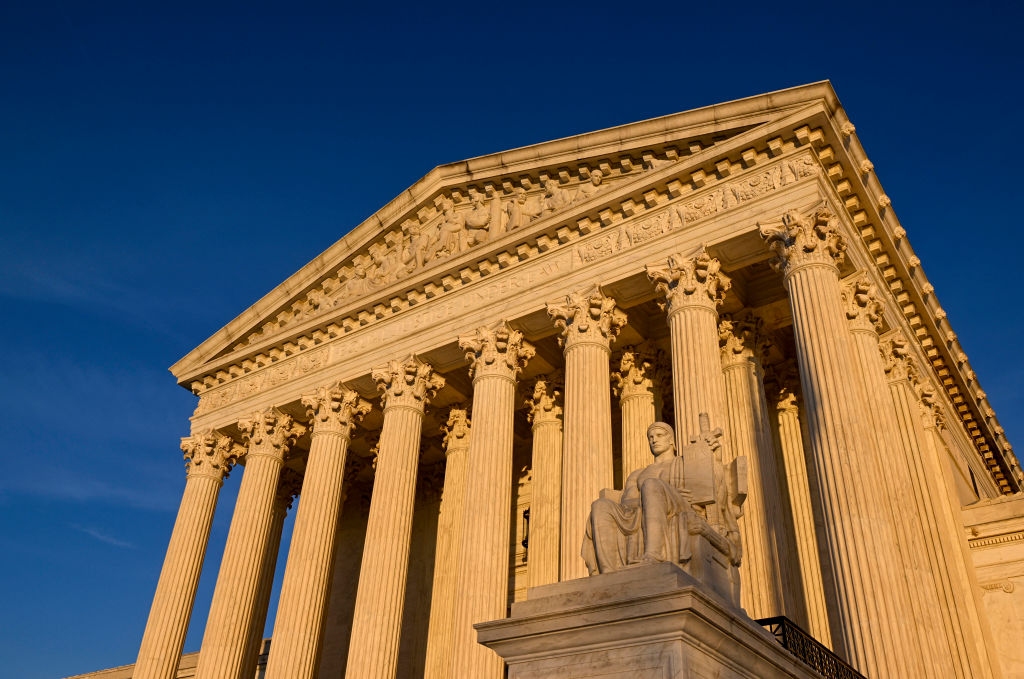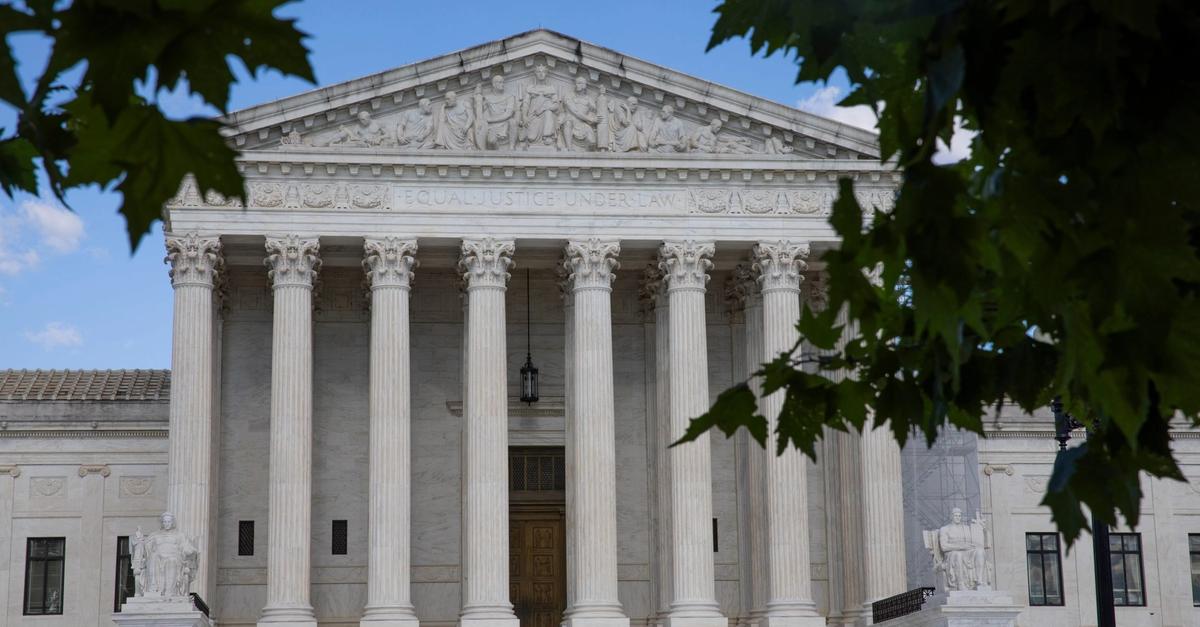
The hallowed halls of the Supreme Court just echoed with a resounding “no.” Not for a landmark constitutional question that will redefine American jurisprudence, mind you, but for a case brought by NBA legend John Stockton. Monday morning’s orders revealed a quiet, yet potent, denial of review in Stockton v. Brown, a case that saw the former Utah Jazz point guard aiming to challenge how the Washington Medical Commission investigated doctors discouraging COVID-19 vaccinations and touting treatments like ivermectin. The core of Stockton’s argument? That these actions by the commission trampled on the First Amendment rights of those physicians.
And just like that, another potential legal battleground over pandemic-era policies was effectively neutralized at the highest level. The justices, in their characteristic inscrutable fashion, offered no commentary, simply lumping the denial in with a raft of other orders. This isn’t the first time the Supreme Court has punted on a major case this term, but for Stockton and his allies, including groups like Children’s Health Defense, it’s a significant setback.
The appeals court that previously weighed in had, quite frankly, eviscerated the plaintiffs’ standing. Their reasoning? A distinct lack of the kind of concrete injury that’s absolutely fundamental to bringing a case before federal courts. You can’t just say you’re offended or that someone else might be harmed; you need to show demonstrable, personal damage. Stockton, it appears, couldn’t clear that hurdle.
Is This a Platform Shift for AI in Legal Discourse?
Look, this isn’t directly about AI, I know. But let’s zoom out for a second. What is happening here, and in countless other dockets across the country, is a massive acceleration of the information pipeline. Think of legal AI not as a tool to write briefs (though it’s getting scarily good at that), but as a system that can analyze, predict, and understand the flow of legal arguments at an unprecedented scale. Stockton’s case, with its First Amendment claims and procedural hurdles, is precisely the kind of complex knot that advanced AI can untangle – or, at least, illuminate the threads of.
We’re witnessing the emergence of AI not just as a research assistant, but as a co-pilot for understanding the very architecture of legal precedent. Imagine an AI that could have, with chilling accuracy, predicted the likelihood of SCOTUS accepting this specific type of First Amendment claim based on its reading of thousands of similar cases. That’s not science fiction anymore; that’s the near-future of legal tech, and it’s exhilarating.
The justices did not add any new cases to their docket for the 2026-27 term.
The justices are scheduled to reconvene for another private conference on Thursday, May 14th, with fresh orders expected the following Monday. Meanwhile, another intriguing case involving an Indiana gun dealer and the City of Chicago’s attempt to sue them for gun sales across state lines was also tossed aside. The common thread? Procedural standing, or rather, the lack thereof. It seems the path to the Supreme Court remains as narrow and winding as ever.
This denial, while seemingly minor in the grand scheme of Supreme Court business, underscores a fundamental reality: the legal system, like any complex organism, is constantly adapting. And as we develop more powerful tools – including AI – to navigate its intricacies, our understanding of what constitutes a winnable case, and indeed, what constitutes justice itself, will inevitably shift. We’re not just seeing new laws; we’re seeing a new language of argumentation emerge, a language that AI is rapidly learning to speak fluently.
What Does This Mean for Physician Speech Rights?
For physicians on the front lines, or those with dissenting medical opinions, this ruling is undoubtedly a disappointment. The hope was that a Supreme Court review could have offered clearer protections for their speech, particularly when it diverges from established public health narratives. However, the court’s decision to avoid wading into the specifics of the First Amendment claim here means that existing legal precedents regarding physician speech and professional conduct remain the primary guideposts. Doctors will likely continue to face scrutiny from medical boards, and the boundaries of protected speech within their professional roles remain contested territory, dependent on specific facts and lower court interpretations.
My unique insight here? This isn’t just about John Stockton or vaccine mandates. It’s about the unfolding narrative of information control in a digitally interconnected world. The Supreme Court, by declining this case, is implicitly saying that the mechanisms for addressing professional misconduct, even when framed as a First Amendment issue, should largely play out within established administrative and judicial channels, rather than through broad constitutional pronouncements. This leaves a void that AI could, in theory, help fill by providing greater clarity on the legal landscape for such speech. But for now, the onus is on individuals to prove concrete harm, a high bar indeed.