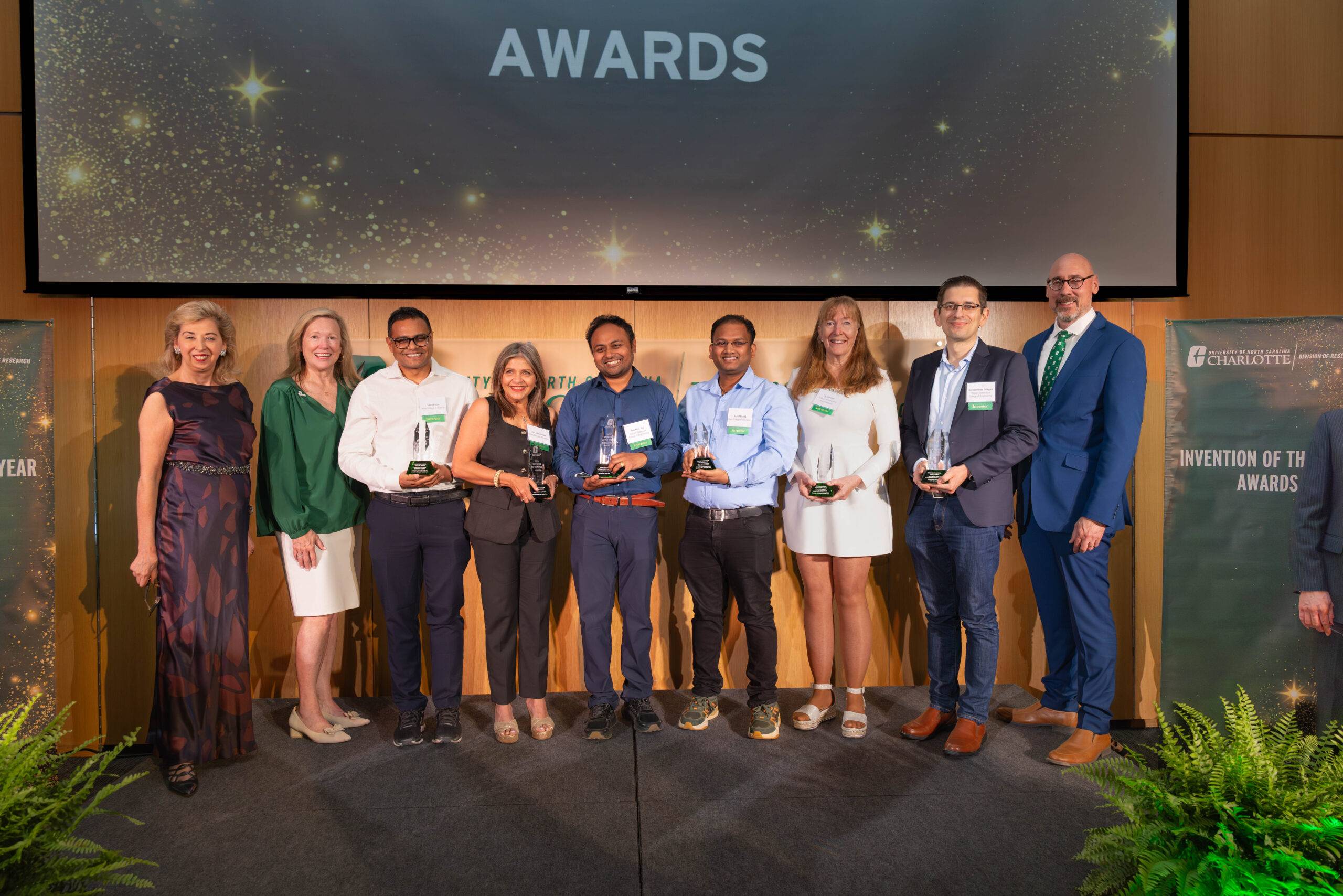
The hum in the Dubois Center wasn’t just polite applause; it was the sound of an institutional engine firing on all cylinders. UNC Charlotte’s 2026 Invention of the Year Awards weren’t just a pat on the back for researchers; they were a strategic declaration, a very public signal that this university is serious about moving beyond academic output and actively sculpting the future through tangible innovation. This wasn’t just about celebrating breakthroughs; it was about celebrating the moment discovery hardens into a patent, a product, a force for change.
Look, universities have always been incubators. That’s the gig. But what’s shifted, what’s genuinely interesting here, is the laser focus on the transition. The awards themselves, featuring brass like John Squires from the USPTO and NC Lieutenant Governor Rachel Hunt, underscore a powerful, almost symbiotic relationship being forged: the academic quest for knowledge now explicitly linked to commercial viability and national security imperatives.
Is This Just Another University Gala?
That’s the cynic’s immediate thought, isn’t it? Another gilded evening. But peel back the veneer, and you see a deliberate architectural shift. Laura Peter, the Executive Director of IP and Technology Transfer, isn’t just managing patents; she’s building bridges. Her background—USPTO, industry, academia—is telling. It’s the kind of cross-pollination that’s essential for understanding how to actually move an idea from a whiteboard scribbled in the dead of night to a licensing agreement that fuels further research.
UNC Charlotte’s own trajectory in patenting and startup creation isn’t accidental. They’re not just participating; they’re climbing the national rankings. This award ceremony is the visible tip of a massive iceberg of strategic investment in intellectual property, designed to capture value and accelerate the impact of discoveries across critical sectors like healthcare, energy, and defense.
What these awards fundamentally do, beyond the champagne and the speeches, is act as a high-octane catalyst. For the researchers, it’s validation, yes, but more importantly, it’s visibility. It’s a spotlight that can attract investors, industry partners, and even future collaborators who might never have stumbled upon their work in the quiet corners of a research department. This is about explain the innovation process and making it navigable for the very people creating it.
As one industry judge reportedly put it, the experience was “eye-opening.” That’s code for: “We underestimated the firepower coming out of this place.” It speaks to the power of creating deliberate forums, curated environments where nascent technologies can collide with the practical realities and immense potential of the market. It’s matchmaking, but with patents.
Why Does The Cross-Disciplinary Approach Matter?
One of the most compelling aspects of the awards is their intentional embrace of diversity across disciplines. Forty-one patented technologies were on the table this year, a significant jump from the inaugural event. This isn’t just a collection of disparate ideas; it’s a deliberate attempt to foster serendipity. When you bring together advancements in, say, materials science and artificial intelligence, you don’t just get two good ideas; you unlock the potential for entirely new paradigms.
This cross-pollination is where the real magic happens. Think of the self-healing polymers designed for resilient electronics and energy systems, now sitting alongside AI-powered drone platforms for disaster response. Or a bi-specific antibody therapy for cancer, adjacent to a portable optical inspection system for high-reliability manufacturing. The juxtapositions aren’t accidental; they’re designed to spark new connections, to let researchers and industry leaders see their own challenges through a different lens, potentially revealing unforeseen solutions.
For Charlotte and North Carolina, this breadth isn’t just a nice-to-have; it’s a strategic weapon. A vibrant innovation ecosystem thrives on the interweaving of diverse capabilities. By connecting universities, startups, and established industries in this manner, the region strengthens its economic foundations and enhances its ability to adapt to future challenges. It’s about building a more resilient, more capable innovation landscape from the ground up.
The Honorees: Glimpses of the Future
The awards themselves highlighted some truly impressive work:
-
Clean Energy and Power Systems: Self-healing Polymers by Christopher Bejger, Sushil Bhatta, Fuead Hasan, and Jonathan Gillen. These aren’t your grandmother’s polymers; they’re designed to mend themselves, promising longer-lasting and more reliable electronics and energy infrastructure. Imagine devices that can autonomously repair minor wear and tear.
-
Information and Data Science: An AI-powered disaster response system from Elizabeth Johnson and Kaleb Wainright. This drone platform is built for immediate action, processing data in real-time to guide emergency management and defense operations. It’s about giving first responders the intel they need, precisely when they need it.
-
Life Sciences and Health: Bi-specific Antibody Therapy developed by Pinku Mukherjee and Timothy Erick. This is precision medicine pushed further, a sophisticated approach designed to supercharge the body’s own immune system to hunt down cancer cells more effectively.
-
Physical and Material Sciences: Portable Optical Inspection Device Capable Of Detecting Microscopic Surface Defects by Kosta Falaggis and Sevda Mamaghani. For industries where even the tiniest flaw can be catastrophic—think aerospace or semiconductors—this device offers a highly reliable, on-site method for quality assurance. It’s about ensuring integrity at a microscopic level.
While the Grand Award recipient wasn’t fully detailed in the provided information, the overall narrative is clear: UNC Charlotte is actively engineering its future, not just discovering it. It’s a compelling model for how academic institutions can become potent engines of commercial and societal progress, moving beyond papers and presentations to the tangible impact of invention.