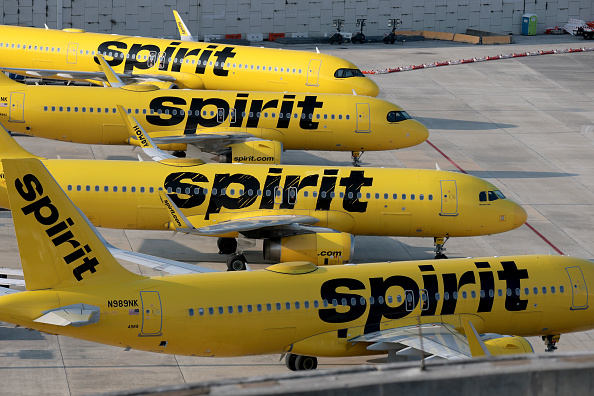
Spirit Airlines is dead.
There. I said it. After years of being the butt of every airplane joke imaginable—the airline that apparently charged for the air you breathed—Spirit Airlines has officially ceased operations. May 2, 2026. Poof. Gone. And you know what? A lot of people are probably breathing a sigh of relief. No more cringeworthy social media videos of passengers discovering hidden fees. No more mid-flight meltdowns over a bag that’s half an inch too wide. But before we all break out the champagne, let’s ask the real question: who actually benefits here, and what does this mean for the rest of us trying to get from Point A to Point B without emptying our wallets?
Let’s be clear, Spirit perfected the ultra-low-cost carrier (ULCC) model. It was a masterclass in stripping away everything you thought you needed on a flight – a seat that reclined, a carry-on bag, even the ability to print your boarding pass at the airport without a penalty. They ran a tight ship, or rather, a tight fleet, sticking to the Airbus A320 family like a barnacle to a hull. Simplified maintenance, streamlined training, bulk plane purchases – it all added up. They even wrangled deals with smaller, less glamorous airports, which, let’s be honest, is a shrewd move if you’re trying to keep costs down and avoid the airline equivalent of rush hour traffic.
For years, this formula worked. Spirit was profitable, and shockingly, had a stellar safety record. Thirty-four years, zero fatal passenger crashes. That’s better than some airlines you probably feel perfectly comfortable booking. It proved, against all odds, that enough people were willing to endure the gauntlet of fees and cramped seating for a drastically lower ticket price. And what was the industry’s response? The majors, like United and American, cobbled together their own “basic economy” fares, essentially adopting Spirit’s playbook but with a veneer of slightly less abject misery. They learned the game from Spirit, and now Spirit’s out of business.
Did the DOJ Kill Spirit?
The writing on the wall, however, got pretty loud after COVID-19. Travel restrictions hammered the airline, and it never really bounced back to its pre-pandemic stride. Then came the failed acquisition attempts. Frontier tried to swoop in, but shareholders said “nah.” Then JetBlue made its move, only for the Department of Justice to step in and wave its antitrust wand, blocking the merger on the grounds that it would hurt competition. A federal court agreed. Fast forward to now, and Spirit’s filing for bankruptcy, not once, but twice. They were drowning in debt, somewhere in the neighborhood of $8.1 billion. The government dithered about a bailout, but ultimately, negotiations crumbled. The final nail? Soaring jet fuel prices, apparently exacerbated by some recent unpleasantness in the Middle East. So, who’s to blame? Many analysts are now whispering that the DOJ made a colossal blunder blocking the JetBlue deal. They thought they were saving consumers, but perhaps they just hastened the inevitable.
And here’s the kicker, the really cynical part: The government considered a bailout, but negotiations collapsed. Think about that. Thousands of jobs on the line, optimistic projections of future profitability (by 2027, no less!), and a company that had genuinely disrupted an entire industry. But nope. Perhaps some old guard at the Treasury looked at Trump’s extensive history with bankruptcies and thought, “Yeah, this is a sinking ship.” A harsh assessment, but sometimes the market just… makes decisions. And sometimes those decisions are brutally efficient.
So, what’s left? A gaping hole in the low-cost market, and a clear signal to other ULCCs: relying solely on volatile fuel prices and aggressive nickel-and-diming is a recipe for disaster. It’s a shame, really, because the idea of genuinely affordable air travel isn’t dead, it just needs a more sustainable execution. Look at Zipair Tokyo, a subsidiary of Japan Airlines. They’re running a low-cost model but apparently don’t treat passengers like walking ATMs. Free Wi-Fi in economy, decent planes, and surprisingly fair add-on pricing. They’re pulling off impressive profit margins, which makes you wonder why Spirit couldn’t figure it out.
Spirit may have been an industry punching bag, but it forced a reckoning. It proved that a significant segment of the flying public would endure inconvenience for savings. Its ghost will likely haunt airline boardrooms, a stark reminder that while cutting costs is essential, alienating your customer base is a slow, painful way to go out of business. We might miss Spirit, in the way you miss a toothache only after it’s gone—a familiar pain that at least had a predictable outcome.
🧬 Related Insights
- Read more: Federal Circuit Nukes Patents Over Missing Inventors — AIA’s Lingering Chaos
- Read more: Oral Arguments Secretly Crown SCOTUS Opinion Writers
Frequently Asked Questions
What happens to Spirit Airlines tickets now? All Spirit Airlines flights have been cancelled. Customers should contact Spirit for refund information or explore alternative travel arrangements. Spirit is expected to provide details on refunds and compensation soon.
Will airfares go up now that Spirit is gone? It’s highly probable that airfares, particularly on routes previously served by Spirit, will increase. With fewer ultra-low-cost options, other airlines may feel less pressure to keep prices competitive.
Is this similar to other airline failures? Spirit’s failure shares similarities with other ULCC struggles, particularly its heavy reliance on ancillary fees and vulnerability to external economic shocks like fuel price volatility and pandemics. However, its inability to secure mergers or bailouts also played a significant role.