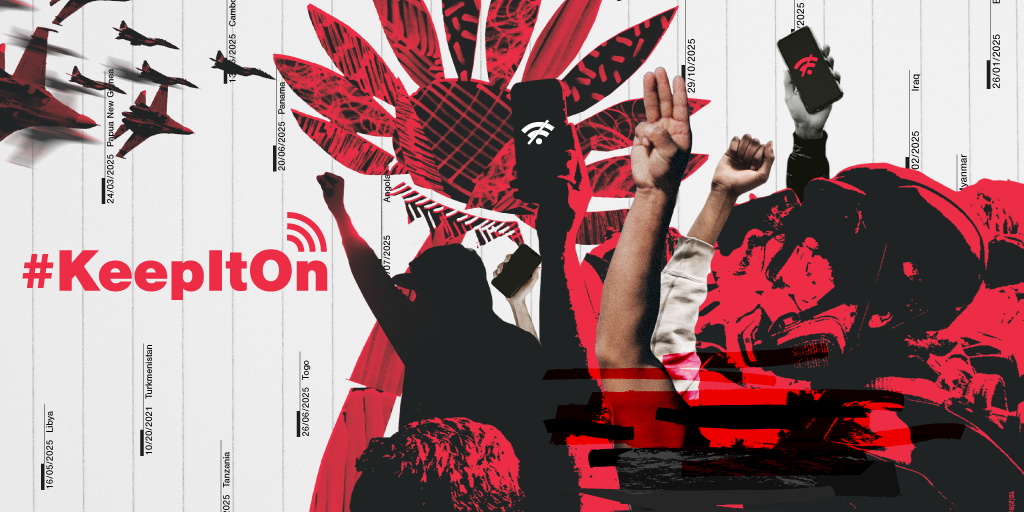
So, 2025. A banner year for digital silence. Specifically, for deliberate, government-mandated digital silence. Access Now and the #KeepItOn coalition dropped their latest report, and the numbers are grim. They logged a staggering 313 shutdowns across 52 countries. That’s not a typo. And Eastern Europe and Central Asia? They didn’t escape the digital guillotine. Twenty-nine shutdowns, seven countries. Ouch.
Authorities, it seems, are getting awfully creative. Or rather, awfully predictable. Elections, political dust-ups, the ever-convenient ‘national security’ card — these are the excuses. Russia, for instance, apparently saw drone threats worthy of widespread disruptions. Never mind the scant evidence. Belarus? They throttled and blocked platforms around their presidential election. Surprise, surprise.
This isn’t just an inconvenience. This is serious business. Critical information vanishes. Democratic processes get choked. People’s safety? Their livelihoods? All put on ice, or worse. It’s a blunt instrument of control, and it’s being wielded with alarming frequency.
Russia Takes the Cake
Russia is leading the charge, and not in a good way. The report flags a ‘sharp rise’ in disruptions. Multiple regions affected, often under the flimsy guise of countering drone attacks. The lack of demonstrable necessity is, frankly, an insult.
Democracy Under Siege
Belarus continues its troubling trend. Platform blocks and throttling during the January 2025 presidential election. It’s a recurring nightmare for democratic aspirations in the region. History, as they say, doesn’t repeat itself, but it often rhymes. And in Belarus, it’s a rather loud, digital rhyme.
The Fightback
But it’s not all doom and gloom. Civil society is pushing back. Kazakhstan is seeing strategic litigation challenging the legality of these shutdowns. Good. Then there are the parallel proceedings. Civil society groups suing telecom operators for implementing shutdown orders. The argument? Companies should respect human rights. It’s about time someone held them accountable beyond the government mandate.
Here’s the thing: these companies often talk a big game about connectivity and human rights. But when the government says ‘shut it down,’ they tend to comply. The legal challenge is aiming to expose that hypocrisy.
Who Got Silenced in EECA?
The Eastern Europe and Central Asia region saw shutdowns in Belarus, Kyrgyzstan, Russia*, Turkmenistan, and Ukraine. Oh, and a footnote: Russia’s numbers are complicated, with Ukraine imposing three shutdowns on Russia. Yes, it’s that messy.
*And just when you thought it couldn’t get worse, emerging info suggests hundreds, maybe thousands, of disruptions across Russia since May 2025. Access Now is still verifying. So, the official count might be a fraction of the true horror.
It’s a stark reminder that the fight for open internet access isn’t a theoretical debate. It’s a daily battle, and in 2025, the shutters came down more often than ever before.
What’s the Historical Parallel Here?
Look, we’ve seen this play out before. Think of the Soviet era, where information was tightly controlled, heavily censored, and access to outside knowledge was a privilege, not a right. Governments then used physical barriers – state-controlled media, limited travel, jamming foreign broadcasts. Now, in our hyper-connected world, the digital barrier is simply the modern, more insidious equivalent. Instead of jamming radio waves, they’re flipping the switch on entire networks. The goal – maintaining control over narratives and populations – remains eerily consistent. It’s just dressed up in 21st-century tech. And the #KeepItOn coalition is our modern-day Samizdat, albeit with far more sophisticated tracking and legal firepower. It’s a fight against a familiar enemy, just armed with different weapons.
The #KeepItOn coalition’s new report reveals that at least 313 shutdowns were implemented in 52 countries. In Eastern Europe and Central Asia the internet was shut down 29 times in seven countries.
This report isn’t just data. It’s a dossier of digital oppression. And it’s a call to arms for anyone who believes information should flow freely. The question isn’t if governments will try to control the internet, but how we’ll ensure they can’t.