Is your firm treating AI like a magic wand or a sophisticated tool? Because the distinction, especially in the high-stakes world of patent law, is no longer theoretical. It’s rapidly becoming the core differentiator between practitioners who merely dabble and those who are genuinely professionalizing their use of artificial intelligence.
This isn’t about AI replacing the nuanced judgment of a seasoned patent attorney; that’s a non-starter. Instead, it’s about recognizing AI’s potential as a potent multiplier. When integrated intelligently, AI can slash project timelines, ensure greater consistency in output, eliminate tedious friction points, and provide invaluable intelligence on patent portfolios. Most importantly, it frees up legal minds to focus on the complex, high-value work that truly demands their expertise.
The divergence is stark. On one side, you have those who treat AI as a black box: feed it a vague prompt, accept whatever it spits out, and hope for the best. This approach often yields inconsistent, and frankly, dangerous, results. On the other, a growing cohort views AI as critical workflow infrastructure. These practitioners meticulously feed AI systems the right context, apply rigorous attorney oversight, validate outputs against primary sources, and embed AI into disciplined, repeatable processes. The dividends are already substantial.
The U.S. Patent and Trademark Office (USPTO) has certainly taken note. Their April 2024 guidance implicitly acknowledges AI’s growing role in patent and trademark application preparation, as well as PTAB and TTAB filings. However, they’ve made it unequivocally clear: existing duties of candor, signature obligations, confidentiality, and professional responsibility remain firmly in the hands of the practitioner. AI is an assistive tool, not an abdication of accountability.
The Workflow is the Weapon
The most effective implementations of AI in patent practice aren’t born from isolated, ad-hoc prompts. They’re architected around structured, deliberate workflows. Think of patent work not as a monolithic task, but as a series of interconnected, modular steps. An attorney doesn’t just ‘draft a patent application.’ They interview inventors, dissect inventive concepts, pore over disclosures, research prior art, understand commercial applications, strategize claim scope, draft claims, build supporting specification language, anticipate design-arounds, assess statutory risks (like Section 101 and 112), prepare visuals, and then navigate the adversarial examination process.
This inherent complexity is precisely where AI can shine. Not as a replacement, mind you, but as an intelligent assistant at clearly defined stages within an attorney-controlled framework. The goal is to use AI where it excels and establish clear guardrails to ensure reliability.
Consider the invention intake process. A well-designed AI workflow might begin by prompting the system Bottom line: an invention disclosure, identify crucial missing technical details, generate targeted questions for inventor interviews, differentiate core inventive concepts from mere embodiments, and map identified advantages to specific technical problems addressed. None of this requires surrendering legal judgment; it simply provides a more strong starting point for the human expert.
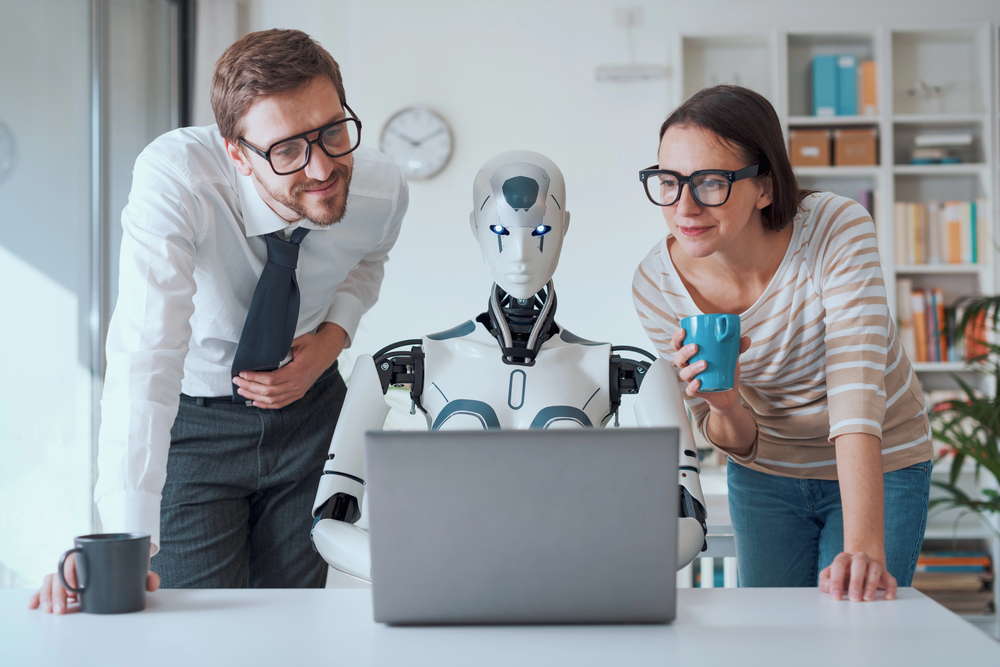
Similarly, in claim drafting, AI can generate alternative claim frameworks, suggest potential dependent claim categories, propose fallback positions, and meticulously test whether each claim limitation is adequately supported by the specification. Crucially, the attorney still dictates the overarching claim strategy and refines the language based on experience and judgment—much like delegating a first draft to a capable junior associate. The AI expands the universe of options and highlights potential gaps, but the professional mind remains firmly in command, facilitating brainstorming rather than relinquishing strategic control.
This is the chasm between casual users and those achieving tangible gains. They’re not asking AI to ‘draft a patent application.’ They’re tasking AI with precisely defined sub-components within a broader, attorney-managed system. And critically, they’re asking AI to perform tasks within its demonstrated capabilities, and no more.
For instance, an open-ended request for AI to scour all patent databases for the ‘closest reference’ to a specific disclosure is a recipe for disappointment. AI is designed to deliver an answer. In such a broad context, it might easily miss the truly relevant prior art or, worse, fabricate a reference that, if real, would be damning. Leaving AI to its own devices in ambiguous situations is a direct route to flawed outcomes.
The question is no longer whether AI will be used in patent practice… The question is whether it will be used casually or professionally.
This quote, from the heart of the professional patent community, encapsulates the seismic shift underway. It’s not about avoiding AI; it’s about mastering it.
The USPTO’s Stance: A Nod and a Warning
The USPTO’s April 2024 guidance is a nuanced piece of policy. It doesn’t ban AI; rather, it clarifies the existing legal and ethical framework within which AI can operate. By emphasizing that AI-assisted work remains the practitioner’s ultimate responsibility, the Office is essentially telling attorneys and agents: ‘Use the tool, but you own the outcome.’ This is a crucial distinction. It means that while AI can accelerate research, assist in drafting, and even flag potential issues, the final sign-off, the strategic decisions, and the legal accountability rest squarely with the human professional.
This stance aligns with the broader regulatory trend seen in areas like the EU AI Act, which focuses on risk-based approaches and human oversight for high-risk AI applications. Patent prosecution, with its potential for significant economic impact and intellectual property rights, certainly falls into a category demanding strong human control.
What’s Next for AI in Patent Prosecution?
The trajectory is clear: AI will become more deeply embedded in patent practice, but always within attorney-defined workflows. Expect to see specialized AI tools emerge that are trained on specific legal datasets and designed for discrete tasks, rather than generalized large language models attempting to do everything. These tools will offer greater precision and reliability. The key will be their integration into existing legal tech stacks and the continued development of best practices for their use. The firms that invest in understanding and implementing these structured, AI-augmented workflows will undoubtedly lead the pack, offering faster, more consistent, and ultimately, more valuable services to their clients.
This isn’t a revolution that happens overnight. It’s an evolution, driven by data, by practical results, and by the undeniable efficiency gains that intelligent AI integration can provide. The casual user will falter; the professional will thrive.
🧬 Related Insights
- Read more: DOJ’s $25K Bribe: Is Hiring Cash Replacing Competence?
- Read more: Patent Academy: Does it Finally Unclog the Inventor Pipeline?
Frequently Asked Questions
What is the USPTO’s guidance on AI in patent applications?
The USPTO’s April 2024 guidance acknowledges AI use in patent and trademark filings but emphasizes that practitioners remain fully responsible for the accuracy, candor, and compliance of all submitted work, regardless of AI assistance.
Can AI replace patent attorneys?
No, AI is seen as a tool to augment, not replace, patent attorneys. It can assist with tasks like research, drafting suggestions, and data analysis, but core legal judgment, strategy, and client counseling remain human domains.
How are successful patent practitioners using AI?
Successful practitioners integrate AI into structured workflows for specific tasks, such as summarizing disclosures, generating interview questions, and suggesting claim variations, all under attorney supervision and validation.