So, what does this Federal Circuit ruling actually mean for the rest of us? Forget the legalese for a second. It means that if you’ve got a clever idea about your phone not blowing up your eardrums with texts when you’re trying to navigate rush hour traffic, good luck patenting it. This isn’t about whether the tech works, but whether the patent itself is worth the paper it’s printed on according to Uncle Sam’s patent office — and now, the courts.
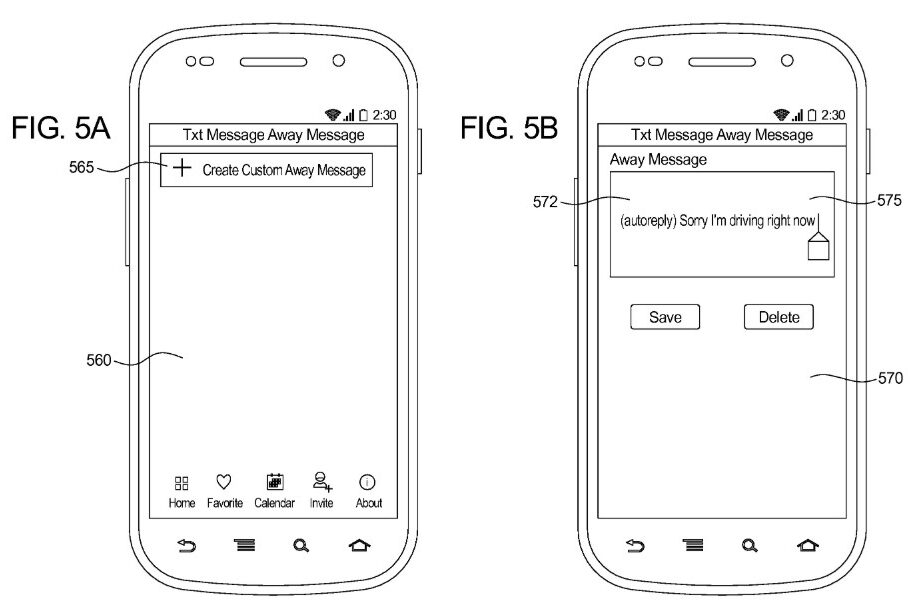
Look, TJTM Technologies thought they had something solid with U.S. Patent No. 8,958,853. The gist? A phone that goes into an ‘inactive mode’ when it pairs with your car, silencing calls and texts, and maybe even sending a polite ‘I’m driving’ auto-reply. Sounds about right for a feature that’s been standard on most phones for years, doesn’t it? They pointed their legal finger at Google’s Android distracted-driving features, presumably hoping for a nice, fat settlement or, dare I say, a licensing fee. But the district court, and now the Federal Circuit, said the patent was essentially just an abstract idea, dressed up in generic tech speak.
Is This Patent Really Just Abstract?
The patent claims this whole rigmarole: a phone with a wireless module, a processor, and memory that, when paired with a car, customizes ‘inactive mode’ functions, accepts user settings for auto-initiation, grabs your away-message text, and then boom — suppresses notifications. The judges, in their infinite wisdom (and probably drowning in similar cases), decided this was all too generic. It didn’t explain how the Bluetooth handshake happens, how the OS interrupts are managed, or how the away message gets sent. It just described what a person might do with existing technology.
“The claim says nothing about how the Bluetooth pairing handshake works, how the OS-level interrupt suppression is accomplished, or how the away message is generated and routed.”
This is where my skepticism kicks in. For 20 years, I’ve watched companies churn out patents for things that are, let’s be honest, obvious extensions of existing tech. They throw in a few buzzwords, a generic flowchart, and suddenly they’re trying to own a piece of functionality that’s practically baked into the silicon. TJTM accused Google of infringing on features that, for all intents and purposes, have been part of the smartphone experience for a decade. Where’s the real innovation here, beyond the very concept of a ‘car mode’ itself?
Who’s Actually Making Money Here?
That’s the million-dollar question, isn’t it? TJTM Technologies likely isn’t a giant manufacturer churning out millions of devices. These are often patent assertion entities, or ‘trolls’ as they’re less charitably known. They acquire patents — sometimes for pennies on the dollar — and then try to extract value by suing companies that are making those devices and software. The real winners here? The lawyers. The judges are just trying to keep the dockets from exploding under the weight of these § 101 challenges.
This ruling aligns with a broader trend. The courts, especially the Federal Circuit, have been increasingly hostile to patents that describe software and business methods without concrete, inventive applications. The Alice framework, which this ruling leans heavily on, has become a powerful tool for dismissing patents that are deemed too abstract. It’s a constant push and pull: companies want to protect their intellectual property, but the patent office and courts are tasked with ensuring patents actually represent genuine inventions, not just ideas that someone jotted down on a napkin.
So, while the user gets to keep enjoying their car mode features without the threat of some obscure company demanding a cut, the bigger question is whether this makes it harder for legitimate innovators to protect truly novel software or hardware. Or, perhaps, it’s just a much-needed filter against patent thickets that stifle rather than encourage innovation. My money’s on the latter, but only if the pendulum doesn’t swing too far the other way.