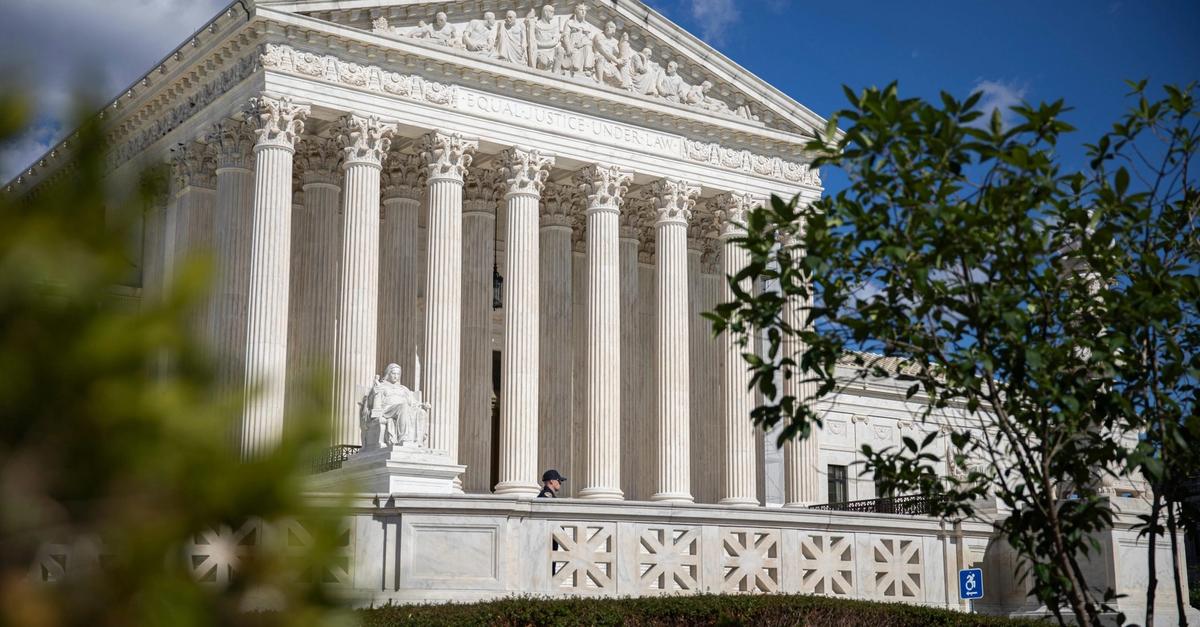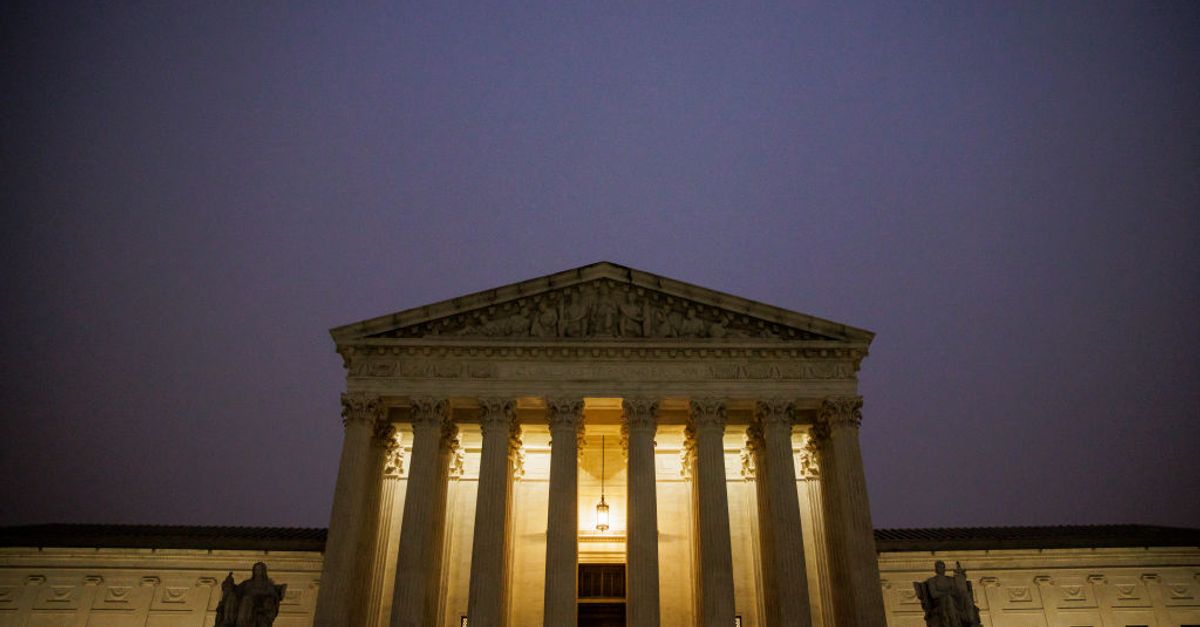
The air in the U.S. Supreme Court’s hallowed halls crackled with urgency this past Thursday afternoon. Lawyers for a cohort of Republican legislators, alongside an election official and two registered voters, were making their case – a desperate plea to keep a Virginia Supreme Court ruling intact. This wasn’t just any legal skirmish; it was a deep dive into state law, a territorial dispute where state courts were holding state actors accountable. And they wanted the nation’s highest court to let it stand.
Calling the push for a pause on the state supreme court’s decision “extraordinary,” these lawmakers argued that the very fabric of state governance was at stake. It’s like someone trying to reroute a river – the state’s own engineers (the Virginia Supreme Court) said ‘no, you can’t do that with this dam design.’ Now, others want the federal flood control authority (SCOTUS) to step in and say ‘yes, you can.’
This whole saga kicked off just three days prior, when Virginia’s own Attorney General, Jay Jones, and a group of Democrats implored the justices to block the state court’s decision. Their goal? To allow Virginia to use a new congressional map, one that’s poised to heavily favor the Democrats in the upcoming 2026 elections. It’s a classic tug-of-war, a partisan chess match played out in the courtroom.
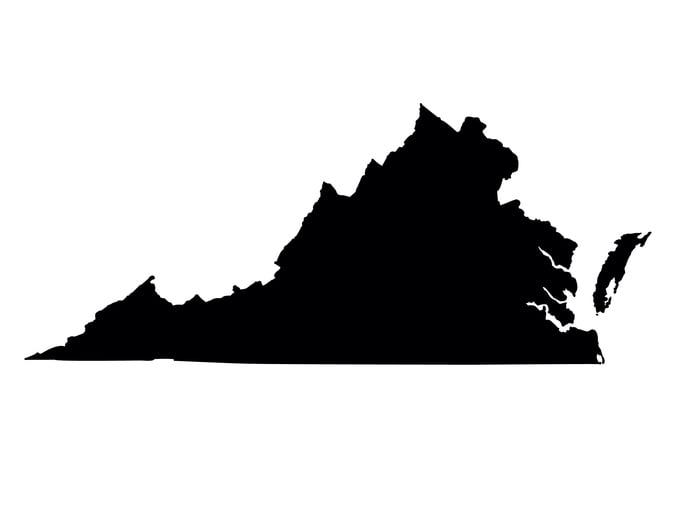
The Virginia General Assembly had inked this new map back in February, part of the nationwide scramble to stack the U.S. House of Representatives in favor of one party or the other. But here’s the kicker: before this map could even see the light of day, voters had to approve a constitutional amendment. This amendment was designed to grant the General Assembly the power to redraw the map outside the usual post-census cycle. And, in April, voters did just that, giving it the green light by a slim margin of about three percent.
Then came the swift, sharp blow from a divided Virginia Supreme Court on May 8th. They invalidated the amendment. Their reasoning? The General Assembly hadn’t followed proper procedures when putting the amendment on the ballot. Specifically, the majority pointed out that under the state constitution, amendments need approval in two separate legislative sessions, with an election for the House of Delegates in between. But, in this instance, over 1.3 million votes had already been cast when the General Assembly first voted on the amendment on October 31, 2025. Essentially, the court said, the General Assembly approved the amendment for the first time after people had already started voting in the 2025 general election. Talk about procedural snags!
AG Jones and his Democratic allies, defending the General Assembly’s actions, marched to the Supreme Court demanding intervention. They argued that the dispute touched on two “critical issues of federal law” – the precise meaning of “election” under federal law and the idea that the state court had gone so far beyond its judicial powers that its ruling should be overturned. They painted a grim picture: the Virginia Supreme Court’s decision was “overthrowing a democratic outcome just days before the Commonwealth must begin its preparations to administer the 2026 midterm election.” It’s a high-stakes drama where the players are accusing each other of not just bending, but breaking the rules of the game.
But the Republican legislators fired back on Thursday, countering that it’s far too late for the Supreme Court to step in. They highlighted that Jones himself had pinpointed May 12th as the ‘point of no return’ for election preparations. And here’s a telling detail: Virginia Governor Abigail Spanberger has already signaled that the state will not be using the 2026 map in the upcoming elections. This isn’t just a legal fight; it’s a race against the clock, and the clock seems to have run out for the new map.
Furthermore, the legislators hammered home another point: the Democrats and Jones hadn’t brought up any arguments based on federal law until they reached the Supreme Court. They “never raised federal claims below,” the legislators’ filing stated. This is a critical point in appellate law; you generally can’t introduce entirely new legal arguments at the highest court if you didn’t make them at the lower levels. It’s like trying to introduce a new witness after the trial has already ended – usually a non-starter.
The core of this dispute is a procedural misstep and partisan jockeying, wrapped in the high-stakes world of redistricting. The Virginia Supreme Court acted on state law. The Democrats want the U.S. Supreme Court to shoehorn federal issues into a state procedural argument, hoping to overturn a state court’s clear interpretation of its own constitution. It’s a bold gambit, but the Republicans are betting that the Supreme Court won’t entertain arguments that were never made in the lower courts. My unique insight here? This is less about federal law and more about a partisan team trying to find a federal loophole after their state-level strategy failed. They’re essentially asking SCOTUS to rewrite Virginia’s procedural rulebook because they don’t like the outcome.
Is This a Federal Law Issue or a State Procedural Glitch?
The heart of the Republican argument boils down to a simple, yet powerful, legal principle: don’t bring new arguments to the Supreme Court. The Virginia Supreme Court invalidated the constitutional amendment based on state procedural grounds – specifically, how the General Assembly passed it. The Democrats, in their appeal to the U.S. Supreme Court, are trying to pivot this into a federal issue, claiming the state court misinterpreted federal law regarding the definition of “election” and exceeded its judicial authority. The Republicans, however, are insisting that since these federal arguments were never raised before the Virginia courts, the Supreme Court shouldn’t even consider them. It’s a classic “waiver” argument: if you don’t object at the time, you can’t complain later.
Why Should We Care About Virginia Redistricting?
This isn’t just about Virginia; it’s a microcosm of the ongoing battle for political power in America. Redistricting, the process of redrawing electoral district boundaries, has become a high-stakes, intensely partisan affair. Maps are drawn to favor one party, often leading to gerrymandering – the manipulation of boundaries to increase a party’s representation. When state courts step in to review these processes, as the Virginia Supreme Court did, it can become a flashpoint. The Democrats wanted a map that would likely send more of their party to Congress. The Republicans, armed with the state court’s ruling, are now using the U.S. Supreme Court to defend that outcome, or at least, to prevent the map from being implemented based on what they see as a procedural screw-up by their opponents.
“the General Assembly passed the proposed constitutional amendment for the first time well after voters had begun casting ballots during the 2025 general election.”
This quote from the Virginia Supreme Court majority’s ruling is the linchpin. It highlights the procedural flaw that allowed the state’s highest court to invalidate the amendment. The timing, according to the court, was fatally off.
This entire affair is a fascinating look at how the complex dance of state law, constitutional procedures, and partisan ambitions can end up on the docket of the U.S. Supreme Court. It’s a reminder that even in an era of advanced AI, the fundamentals of law – procedure, jurisdiction, and the careful interpretation of rules – still hold immense power.
**
🧬 Related Insights
- Read more: Virginia Election Overturned: Redistricting Fiasco Hits Supreme Court
- Read more: Trump Backs AI ‘Kill Switch’ After Cyber Attack Demo
Frequently Asked Questions**
-
What was the Virginia Supreme Court’s ruling? The Virginia Supreme Court invalidated an amendment to the state’s constitution that would have allowed the General Assembly to draw a new congressional map outside the normal redistricting cycle. They ruled the amendment was not valid because the General Assembly didn’t follow proper procedures, specifically passing it after voters had already begun casting ballots.
-
Why are Republican legislators asking the U.S. Supreme Court to intervene? Republican legislators are urging the U.S. Supreme Court to leave the Virginia Supreme Court’s ruling in place. They argue that the case involves state courts applying state law and that the opposing side is bringing up federal arguments for the first time in the Supreme Court, which they contend should not be allowed.
-
Will Virginia use the new congressional map for the 2026 elections? It appears unlikely. The Virginia Supreme Court invalidated the amendment that would have enabled the new map, and even Governor Abigail Spanberger has indicated the state will not use the 2026 map in the upcoming elections, suggesting the old map will likely remain in effect.