Could the Supreme Court’s seemingly mundane administrative orders mask a subtle shift in how emergency powers are wielded, and what does that mean for access to critical healthcare and electoral integrity?
It’s easy to get lost in the procedural churn of the highest court in the land, to see a list of orders and decisions as just paper shuffling. But sometimes, the quiet moments — the emergency requests, the sudden finalizations of opinions — reveal more about the court’s operational tempo and the weight of its decisions than any landmark oral argument.
Here’s the thing: While the nation fixates on the grand pronouncements, the justices were busy last week with a flurry of activity that could have immediate, tangible impacts. On the healthcare front, Danco Laboratories and GenBioPro, key manufacturers of the abortion pill mifepristone, went directly to the Supreme Court, asking them to hit pause on a Fifth Circuit ruling that would have forced the drug to be dispensed only in person. Justice Samuel Alito, the designated gatekeeper for emergency appeals from that circuit, stepped in. He granted a temporary halt, buying time for responses from Louisiana and the FDA, with the stay set to expire on May 11. This isn’t a decision on the merits, mind you; it’s a holding action, a pause that nonetheless keeps the status quo of mail access intact for now. It highlights how much can hinge on these emergency requests, bypasses that can sometimes feel like backdoors to the highest court.
Then there’s the political mapmaking.
The Court finalized its opinion in Louisiana v. Callais, the case where it struck down the state’s congressional map. The urgency? To give Louisiana enough time to redraw its maps for the 2026 elections. This isn’t just about lines on a map; it’s about representation, about how power is distributed, and how quickly the legal system can force political actors to adapt. The speed of this finalization, coming after an earlier mandate from the Ninth Circuit related to Apple’s App Store policies was also put on the court’s interim docket, suggests a court that, when it deems necessary, can move with surprising alacrity.
The Longevity Game at SCOTUS
Beyond the immediate rulings, there’s Justice Clarence Thomas. He’s not just another justice; he’s becoming a fixture of judicial history. Last week, he moved up the list of longest-serving Supreme Court justices, a nod to his nearly three decades on the bench. Reuters pointed out that if he remains until May 2028, he’ll set the court’s all-time longevity record. This isn’t just trivia. A justice serving that long accumulates immense influence, shaping the court’s direction and institutional memory. His presence, as Reuters noted, has been instrumental in steering the court rightward, even when his individual views haven’t always prevailed. His authorship of key Second Amendment rulings and his concurrence in overturning Roe v. Wade are testaments to his impact.
It’s fascinating to consider the parallel between Thomas’s tenure and the very concept of institutional longevity. These are figures whose every utterance, every dissent, every concurrence, echoes through years, sometimes decades. It makes you wonder: does the sheer weight of time on the bench, the accumulation of experience and judicial philosophy, inherently grant a certain gravitas, or perhaps a certain calcification, to a justice’s approach?
Clerks and Their Echo Chamber
Speaking of influence, a recent Bloomberg Law analysis dropped a bit of a bombshell: former clerks to the late Justice Antonin Scalia are dominating the Supreme Court docket this term. We’re talking nearly three dozen cases, or 52% of the arguments. Twelve former Scalia clerks, all men, appeared in 31 arguments. Six cases even featured two Scalia alumni arguing on opposing sides. The report points to Solicitor General D. John Sauer, himself a former Scalia clerk, for packing his office with other like-minded former clerks. This isn’t just about former clerks having good lawyering skills; it’s about a network, a shared intellectual lineage, a particular way of seeing the law that’s getting a disproportionate amount of airtime at the highest level.
It’s a striking illustration of how judicial philosophy, once embedded in a clerkship, can ripple outward. These clerks aren’t just aides; they become advocates, shaping arguments and legal strategies, and their formative experiences at the highest court can profoundly influence their careers and the very cases they bring before it.
The ‘Pop’ Culture of the Bench
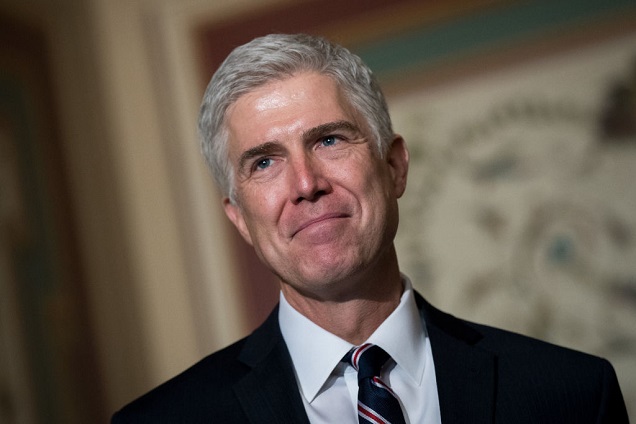
Justice Neil Gorsuch, meanwhile, is out there plugging his children’s book, Heroes of 1776. But he also used the platform to discuss originalism, the declining public trust in the Supreme Court, and the inherent disagreements among the justices. His comments about the court not being a popularity contest are, of course, boilerplate judicial independence talk. What’s more interesting is his frank admission that he’ll never persuade his colleagues on certain issues – like his friend Justice Sotomayor, who is not an originalist. “We know that. That’s part of our job. We accept that.” This acknowledgement, that fundamental ideological divides are not only present but accepted as part of the judicial process, is a rare glimpse into the professional dynamics of the Court.
It’s a delicate dance, isn’t it? The need for judicial independence versus the very real impact of public perception. Gorsuch’s candidness about inescapable disagreements among ideological opposites is perhaps more illuminating than any pronouncement on statutory interpretation. It suggests a mature understanding, at least from his perspective, that the Court’s work is about resolving disputes according to deeply held legal philosophies, not about achieving consensus or pleasing the crowd.
Meanwhile, the legislative branch is eyeing the judiciary’s longevity. Rep. Johnny Olszewski is pushing a constitutional amendment for 18-year term limits for Supreme Court justices. The ROBE Act, as it’s called, is a direct response to the perceived entrenchment of justices and a desire for more regular turnover and, presumably, a court that better reflects contemporary society. It’s a perennial debate, one that resurfaces whenever the Court’s composition or decisions become particularly contentious.
🧬 Related Insights
- Read more: AI Liability: Who Is Responsible When Artificial Intelligence Causes Harm?
- Read more: Musk v. OpenAI: The AGI Trust Battle Hits Court
Frequently Asked Questions
Will the Supreme Court’s stay on the abortion pill ruling affect other medications?
This stay is specific to mifepristone and the legal challenge brought by Danco Laboratories and GenBioPro. It does not set a precedent for other medications, though it highlights the court’s willingness to grant emergency relief in specific circumstances.
How does Justice Thomas’s longevity compare to other Supreme Court justices?
Justice Clarence Thomas is on track to become the longest-serving justice in Supreme Court history if he remains on the bench until May 20, 2028. His tenure thus far already places him among the most senior justices.
What are term limits for Supreme Court justices?
Term limits for Supreme Court justices would mean setting a maximum number of years a justice could serve on the court. There are currently no term limits for U.S. Supreme Court justices, leading to the possibility of very long tenures.